

How Big Data Analytics for Law Enforcement Turns Complex Evidence Into Clear Insights
Big data analytics for law enforcement is the use of AI, machine learning, and intelligence analytics to process large volumes of investigation data such as CDRs, financial transactions, OSINT, surveillance records, device logs, and case files. It helps agencies identify hidden relationships, detect suspicious patterns, connect fragmented evidence, and make faster operational decisions.
Today’s investigations often span multiple evidence points, identities, locations, devices, and digital activity trails. A single case can involve phone records, bank transactions, social media activity, CCTV footage, vehicle movement, cyber logs, and multiple identities. The real challenge is not only collecting data, but connecting it in a way that produces actionable intelligence.
This is where the IntelliView big data intelligence platform helps agencies transform fragmented investigation data into clear, connected, and operationally useful intelligence.
What Is Big Data Analytics in Law Enforcement?
Big data analytics in law enforcement refers to the process of collecting, organizing, correlating, and analyzing large volumes of investigation data to uncover patterns, relationships, risks, and hidden connections.
Instead of reviewing every record manually, investigators can use data intelligence platforms to connect people, devices, locations, accounts, vehicles, transactions, and events across multiple datasets.
In simple terms, big data analytics helps law enforcement agencies answer important questions faster: Who is connected to whom? Which phone numbers, accounts, or locations appear repeatedly? Are separate complaints part of the same network? Which entities show suspicious behavior? What patterns are hidden inside large datasets?
Why Do Law Enforcement Agencies Need Big Data Analytics?
Law enforcement agencies need big data analytics because modern crime is more digital, distributed, and data-heavy than ever before. Criminal networks often operate across multiple communication channels, financial systems, online platforms, and geographic locations.
Traditional investigation workflows can struggle when evidence is spread across different systems. Investigators may have access to the data, but connecting it manually takes time and can leave important patterns unnoticed.
Big data analytics helps agencies: Reduce manual analysis time, connect fragmented evidence, detect hidden relationships, identify suspicious patterns, improve case intelligence, support faster decision-making, and strengthen investigation reporting.
Key Data Sources Used in Law Enforcement Analytics
| Data Source | Investigation Value |
|---|---|
| CDRs and telecom metadata | Reveals communication patterns, call frequency, location movement, and suspect contact networks |
| Financial transactions | Tracks money trails, fraud networks, mule accounts, suspicious transfers, and layered transactions |
| OSINT data | Identifies public digital footprints, social links, online profiles, and open-source indicators |
| Device logs | Shows access activity, login patterns, digital behavior, and device-level evidence |
| Surveillance inputs | Helps analyze movement, presence, event timelines, and location-based activity |
| Case files and reports | Connects past records, known suspects, historical evidence, and repeated investigation patterns |
| Vehicle and location data | Helps identify movement trails, repeated routes, and geographic risk zones |
| Digital evidence records | Connects documents, images, videos, audio, and other case-related files |
Traditional Investigation vs Big Data Intelligence Platform
| Area | Traditional Investigation | Big Data Intelligence Platform |
|---|---|---|
| Data Review | Manual and time-consuming | Unified and AI-assisted |
| Relationship Mapping | Difficult across large datasets | Visual link analysis between entities |
| Entity Matching | Fragmented across records | AI-assisted entity resolution |
| Pattern Detection | Dependent on manual review | Detects anomalies, clusters, and hidden links |
| Reporting | Manually prepared | Structured intelligence reports |
| Collaboration | Limited visibility across teams | Shared investigation view |
| Decision-Making | Slower and reactive | Faster and intelligence-led |
Traditional investigation methods are still important, but they need to be supported by modern intelligence systems. When agencies combine investigative expertise with big data analytics, they can move from disconnected evidence to a clearer operational picture.
How IntelliView Helps Turn Fragmented Data Into Actionable Intelligence
IntelliView is designed to help agencies connect complex datasets and convert them into structured intelligence. It supports investigation teams by bringing multiple data sources into one analytical environment where relationships, patterns, entities, and risks can be identified more efficiently.
The platform helps investigators move from raw data to intelligence by supporting multi-source data ingestion, link analysis, entity resolution, intelligence fusion, case intelligence, predictive risk indicators, command center visibility, and structured investigation reports.
Instead of treating each dataset separately, IntelliView helps connect the bigger picture. A phone number can be linked to a person, that person can be linked to a bank account, that account can be linked to a suspicious transaction chain, and the entire network can be visualized for further investigation.
IntelliView Capabilities and Investigation Value
| IntelliView Capability | What It Does | Investigation Value |
|---|---|---|
| Link Analysis | Maps relationships between people, accounts, devices, locations, and events | Reveals hidden criminal networks |
| Entity Resolution | Matches duplicate, disguised, or repeated identities | Connects aliases, accounts, phone numbers, and suspect profiles |
| Intelligence Fusion | Combines multiple data sources into one investigation layer | Creates a unified operational view |
| Case Management | Organizes evidence, entities, timelines, and reports | Improves investigation workflow |
| Predictive Risk Intelligence | Detects risk patterns, anomaly clusters, and suspicious behavior | Supports proactive investigation planning |
| Command Center View | Provides operational visibility across incidents and intelligence inputs | Helps teams respond faster |
| Report Generation | Produces structured intelligence summaries | Improves documentation and decision support |
Link Analysis in Law Enforcement Investigations
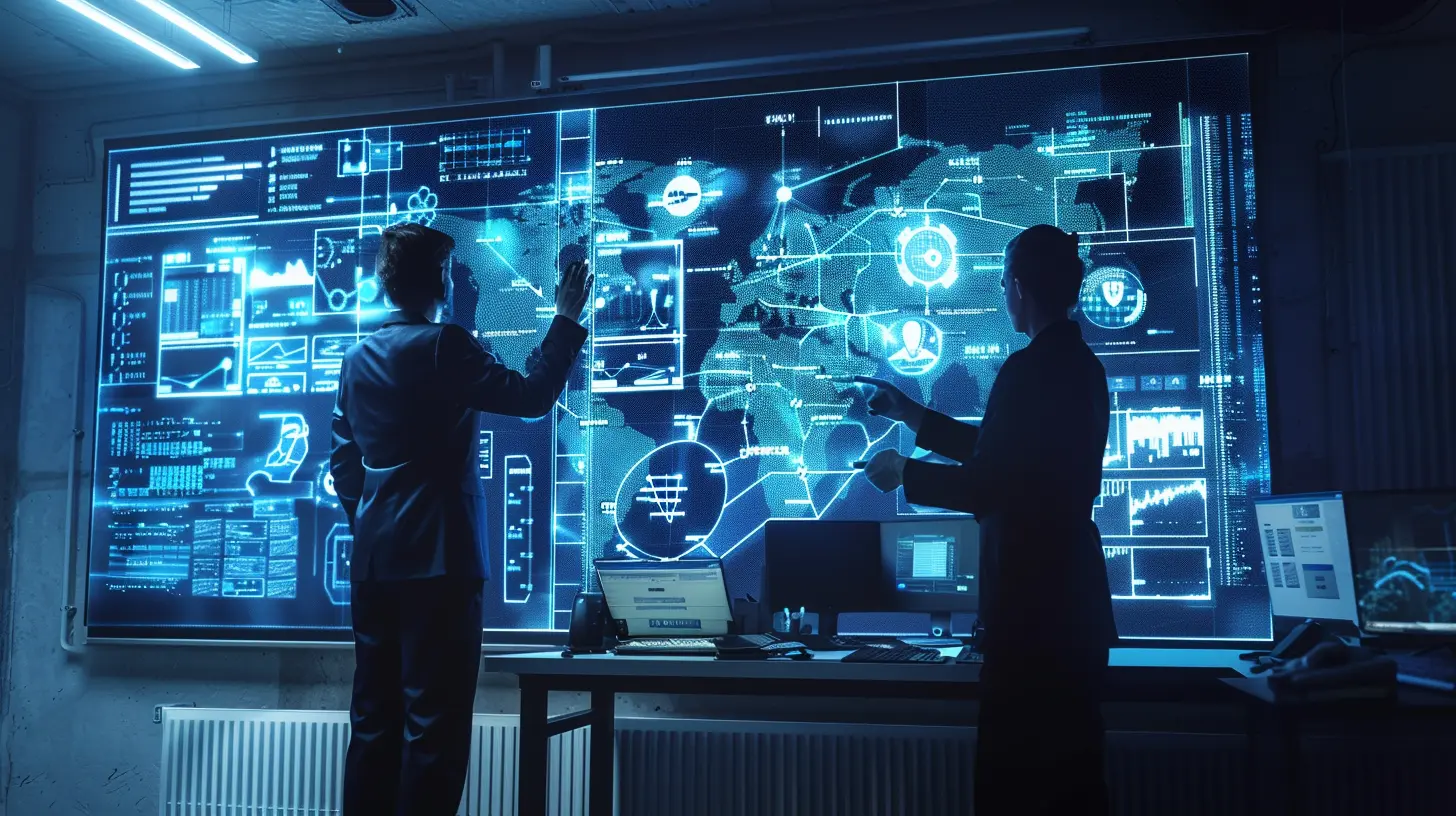
Link analysis helps investigators visualize relationships between entities such as people, phone numbers, bank accounts, devices, vehicles, locations, and events.
For example, a fraud case may involve different phone numbers, social media accounts, mule accounts, and transaction points. Individually, each record may look separate. But when visualized through link analysis, investigators may discover that multiple entities are part of the same organized network.
Link analysis can help law enforcement agencies identify suspect clusters, repeated communication links, shared bank accounts, common locations, connected devices, hidden associates, movement patterns, and fraud or crime networks.
In complex cases, the most valuable intelligence is often hidden in the connections between entities. Link analysis makes those connections visible.
Entity Resolution: Connecting People, Devices, Accounts, and Events
Entity resolution is the process of identifying when different records, aliases, phone numbers, addresses, accounts, or identifiers belong to the same person, organization, or suspect profile.
This is important because suspects may use multiple identities, phone numbers, email addresses, devices, or financial accounts. Without entity resolution, investigators may treat these as separate records.
Entity resolution helps agencies connect different spellings of the same name, multiple phone numbers linked to one person, shared addresses or device IDs, repeated bank account usage, alias profiles, duplicate case records, and common digital identifiers.
For law enforcement, this can reduce confusion and create a clearer profile of suspects, victims, associates, and organizations involved in a case.
Intelligence Fusion for Modern Investigations
Intelligence fusion combines data from multiple sources into one unified intelligence view. This allows investigators to analyze telecom data, financial transactions, OSINT, surveillance inputs, device logs, and case records together.
For example, telecom metadata may show communication between suspects, financial data may show transaction activity, and OSINT may reveal online identities. Separately, these datasets provide partial information. Together, they create a stronger intelligence picture.
Intelligence fusion helps agencies build complete case timelines, connect multiple evidence sources, identify high-risk entities, support multi-agency collaboration, reduce fragmented analysis, and improve operational decision-making.
In modern investigations, intelligence fusion is essential because criminal activity rarely exists in one dataset.
Example Scam Investigation: How Big Data Analytics Reveals a Fraud Network
Consider a financial crime unit receiving multiple complaints about a digital investment scam. Victims are contacted through fake social media profiles, moved to messaging apps, and persuaded to transfer money into different bank accounts.
At first, each complaint appears separate. Different victims report different profiles, phone numbers, and payment accounts. But with big data analytics, investigators can connect the hidden patterns.
Sample Scam Report
| Report Field | Example Intelligence |
|---|---|
| Case Type | Digital investment scam |
| Primary Indicators | Fake social media profiles, repeated phone numbers, suspicious bank accounts |
| Data Sources Analyzed | OSINT, CDRs, financial transactions, device logs |
| Key Entities | 12 phone numbers, 7 bank accounts, 4 mule accounts, 3 repeated IP addresses |
| Suspicious Pattern | Multiple victims linked to the same payment and communication network |
| Network Risk Level | High |
| Suggested Action | Investigate linked phone numbers, trace mule accounts, review transaction chain, identify operators |
Big data analytics can reveal that separate victim complaints are connected through repeated phone numbers, shared transaction accounts, overlapping IP addresses, and common digital identities. This helps investigators identify a larger fraud network instead of treating each complaint as an isolated case.
A platform like IntelliView can support this process by connecting digital identities, payment channels, communication records, and suspect clusters into a single investigation view.
Sample IntelliView Investigation Output
The following is a fictional sample report format showing how a structured intelligence report can support investigation teams.
| Section | Sample Output |
|---|---|
| Investigation Objective | Identify hidden relationships across suspects, accounts, phone numbers, and locations |
| Data Ingested | CDRs, transaction logs, OSINT profiles, case records |
| Entities Detected | Persons, phone numbers, bank accounts, IP addresses, locations, vehicles |
| Link Analysis Result | Five suspects connected through shared devices, repeated calls, and transaction patterns |
| Entity Resolution Result | Three aliases matched to one primary suspect profile |
| Intelligence Fusion Result | Telecom, financial, and OSINT data connected into one investigation graph |
| Risk Indicators | High-frequency calls before transfers, repeated low-value transactions, common login locations |
| Investigator Recommendation | Prioritize suspect cluster, review transaction chain, validate location evidence |
IntelliView generated a unified investigation view showing how separate records across telecom, financial, and OSINT datasets were connected to the same suspect cluster. The platform helped identify aliases, repeated contact points, suspicious transaction behavior, and high-risk entities for further investigation.
Predictive Policing and Risk Intelligence
Predictive analytics in law enforcement should be used responsibly. The goal is not to claim that AI can predict crime with certainty. Instead, risk intelligence helps agencies identify patterns, anomaly clusters, suspicious movement, and recurring activity indicators.
Predictive risk intelligence can support risk zone identification, suspicious activity pattern detection, resource prioritization, anomaly cluster analysis, repeat-offender pattern review, and event and incident monitoring.
When used carefully, predictive analytics helps agencies make better-informed decisions and prioritize investigative attention where risk indicators are stronger.
Command and Control Centre Intelligence

Command and control centres need fast visibility across incidents, alerts, field inputs, intelligence feeds, and operational data. Big data analytics supports these environments by combining live and historical intelligence into one decision layer.
For command centres, IntelliView can support real-time situational awareness, multi-agency coordination, incident monitoring, location-based intelligence, threat pattern visibility, faster response decisions, and operational reporting.
In high-pressure environments, decision-makers need clear intelligence, not scattered data. A unified intelligence platform helps teams understand what is happening, where it is happening, and which entities are connected.
Use Cases of Big Data Analytics for Law Enforcement
Cybercrime Investigation
Cybercrime investigations often involve IP logs, devices, digital wallets, fake profiles, email addresses, and online activity. Big data analytics helps connect these indicators to identify suspect networks and digital behavior patterns.
Financial Crime and Fraud Networks
Financial crime teams can use big data analytics to detect suspicious transactions, mule accounts, layered transfers, repeated beneficiaries, and hidden relationships between individuals and organizations.
Organized Crime Investigation
Organized crime cases often involve multiple suspects, vehicles, locations, phone numbers, and financial links. Link analysis and intelligence fusion help reveal the structure of these networks.
Border Security and Critical Infrastructure
Border security and critical infrastructure teams can use intelligence analytics to monitor routes, incidents, movement patterns, threat indicators, and suspicious entity behavior.
Digital Forensics and Case Intelligence
Digital forensics teams handle large volumes of digital evidence. Big data analytics helps connect evidence records, timelines, suspects, devices, locations, and case files into a unified investigation view.
Benefits of Big Data Analytics for Law Enforcement Agencies
| Benefit | Impact |
|---|---|
| Faster investigation workflows | Reduces manual review time and accelerates intelligence extraction |
| Better evidence correlation | Connects fragmented records across multiple sources |
| Stronger pattern discovery | Reveals hidden links, anomalies, and suspicious clusters |
| Improved reporting | Creates structured intelligence summaries |
| Better collaboration | Supports shared intelligence views across teams |
| Faster decisions | Helps agencies act on timely insights |
| Reduced data silos | Brings different datasets into one analytical environment |
| Improved operational awareness | Supports command centres and field operations |
Why Agencies Need a Unified Intelligence Platform
Modern investigations cannot depend only on isolated tools. Agencies need a unified intelligence platform that can connect, analyze, visualize, and report across multiple data sources.
A unified platform helps investigators move from fragmented records to connected intelligence. It supports the full investigation journey: data ingestion, entity detection, link analysis, intelligence fusion, case management, and reporting.
For agencies handling large and complex investigations, an AI-powered investigation platform such as IntelliView can help improve speed, clarity, and operational confidence.
Conclusion
Law enforcement agencies today are not limited by the amount of data they collect. The real challenge is connecting the right data, identifying the right patterns, and turning complex information into actionable intelligence.
Big data analytics helps agencies move beyond manual review and fragmented systems. It enables investigators to connect people, devices, accounts, locations, transactions, and events across large datasets.
With capabilities such as link analysis, entity resolution, intelligence fusion, predictive risk intelligence, and command center visibility, IntelliView helps agencies transform complex investigation data into clear, actionable intelligence.
Explore IntelliView to see how PaladinAi helps agencies connect fragmented evidence, uncover hidden patterns, and accelerate modern investigations.
Frequently Asked Questions
Ready to experience & accerlate your Investigations?
Experience the speed, simplicity, and power of our AI-powered Investiagtion platform.
Tell us a bit about your environment & requirements, and we’ll set up a demo to showcase our technology.