

Big Data in Law Enforcement: Complete Guide to Predictive Policing, Crime Analytics & Future Trends
Big data is fundamentally reshaping modern law enforcement. What was once a reactive system responding to crimes after they occurred is now evolving into a proactive, intelligence-driven model powered by data analytics, artificial intelligence (AI), and machine learning (ML).
From predicting crime hotspots to uncovering hidden criminal networks, big data is enabling agencies to make faster, smarter, and more precise decisions. However, alongside these advancements come critical concerns around privacy, bias, and accountability.
In 2019, the Chicago Police Department's predictive policing algorithm identified hotspots that reduced burglaries by 6%; however, later audits revealed it disproportionately targeted Black neighborhoods by 80%. This case highlights a key reality: big data in policing is powerful - but not without risks.
This comprehensive guide explores everything you need to know about big data in law enforcement, including its applications, benefits, risks, tools, real-world use cases, and future direction.
What Is Big Data in Law Enforcement?
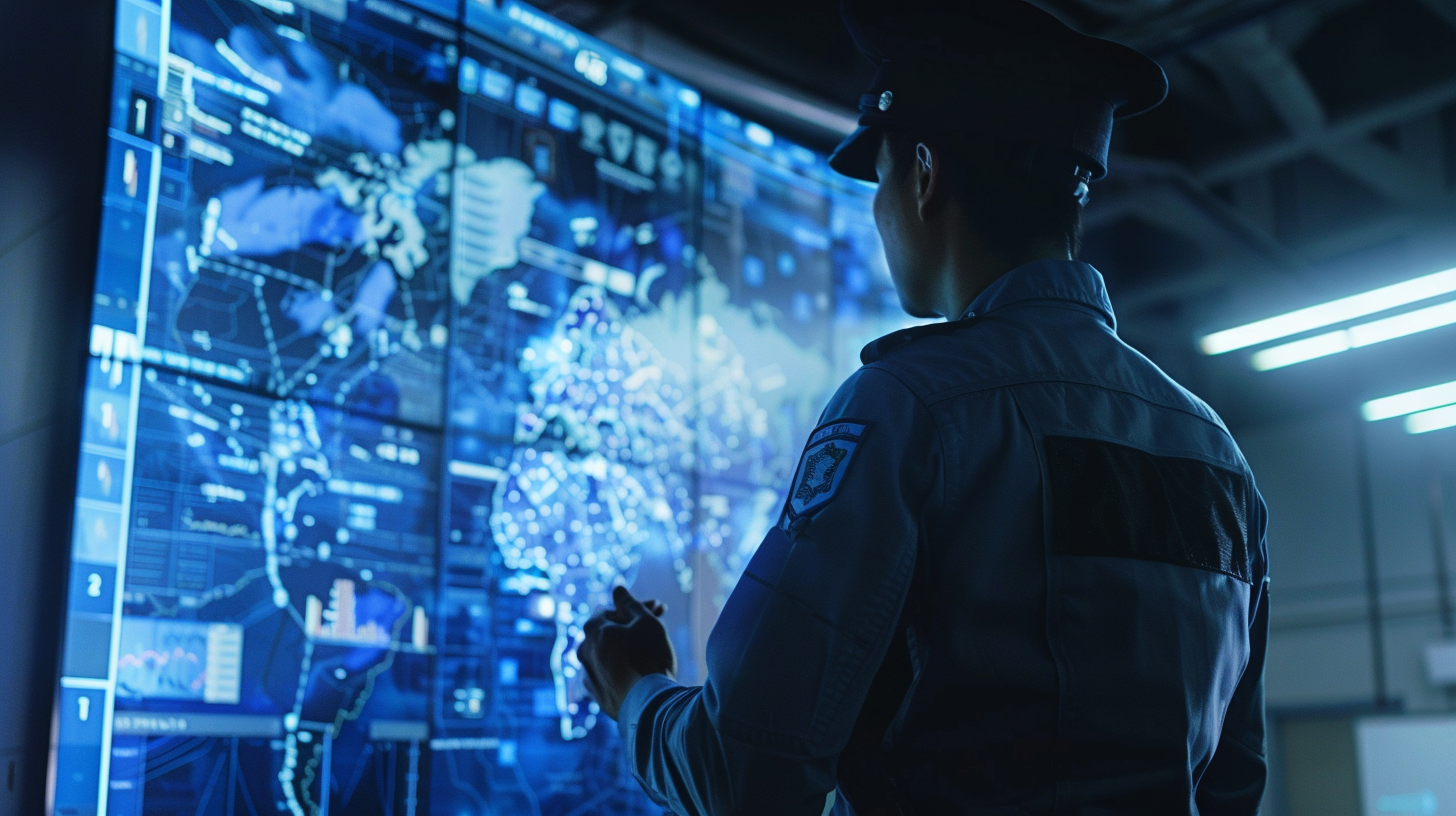
Big Data in law enforcement refers to the massive volumes of structured and unstructured data from sources like surveillance cameras, geospatial information systems (GIS), and crime reports, analyzed through big data analytics and machine learning to identify crime patterns, enable predictive policing, and support data-driven policing strategies. Pioneered by entities like the New York City Police Department (NYPD) with CompStat, this approach integrates artificial intelligence (AI) and cloud computing to enhance crime analysis, crime prediction, and public safety.
Modern platforms such as PaladinAi’s IntelliView (Big Data Analytics Platform) extend this by integrating multiple data sources into unified intelligence views, enabling deeper link analysis and cross-agency investigations.
By leveraging statistical crime mapping and risk terrain modeling, law enforcement agencies achieve proactive policing, crime reduction, and optimized resource allocation, transforming traditional methods into evidence-based strategies for violence prevention and counterterrorism.
Agencies use Big Data to pinpoint crime hotspots through place-based prediction, focusing patrols on high-risk areas identified by GIS data. For instance, combining traffic camera feeds with incident reports helps predict where burglaries cluster. This leads to better patrol allocation and faster response times.
Experts like Dr. Matthew Loux highlight how machine learning processes vast datasets for person-based prediction, tracking repeat offenders via social network analysis.
Similarly, platforms like PaladinAi IntelliView and AI Assistant help investigators process large datasets and extract intelligence faster through secure, air-gapped AI systems.
Such tools support crime prevention by flagging potential threats early. Yet, they raise concerns over algorithmic bias, police accountability, and privacy violations.
Overall, Big Data shifts policing from reactive to proactive, integrating AI with real-time data for smarter decisions. Agencies balance these benefits with ethical safeguards to maintain public trust. This evolution promises safer communities through precise, informed actions
What Are the Key Characteristics of Big Data (3 Vs)?
The key characteristics of Big Data in law enforcement are defined by the 3 Vs: Volume, referring to massive datasets from surveillance cameras and crime reports; Velocity, the speed of real-time data processing for crime prediction; and Variety, encompassing structured crime patterns and unstructured social network analysis (SNA) data.
Volume involves handling enormous amounts of information from sources like GIS and body cameras. Law enforcement uses cloud computing to store and analyze this data for crime analysis. For example, years of reports reveal long-term crime hotspots, aiding resource allocation.
- High volume from multiple sensors enables statistical crime mapping.
- It supports risk terrain modeling for environmental risk factors.
- Agencies scale storage to manage growing data streams effectively.
Velocity focuses on processing data quickly, such as live feeds for immediate patrol allocation. Real-time analysis of social media flags emerging threats during events. This speed enhances proactive policing and violence prevention.
Variety covers diverse formats, from structured GIS maps to unstructured video. Geospatial information systems (GIS) integrate these for comprehensive views. Tools like AI handle this mix, improving crime reduction through holistic insights
How Is Big Data Used in Law Enforcement?
Big data is used in law enforcement through advanced big data analytics to power predictive policing, crime forecasting via machine learning, surveillance via cameras and facial recognition, and criminal network analysis using social network analysis (SNA), enabling agencies to detect crime patterns, hotspots, and networks for proactive interventions.
Data-driven policing supports crime prevention by analyzing vast datasets from arrests, calls for service, and social factors. Techniques like risk terrain modeling pinpoint environmental risks. This leads to smarter resource allocation and proactive measures.
Challenges include addressing algorithmic bias and police accountability. Experts recommend regular audits of models. Balancing privacy violations with public safety remains key in these applications.

Predictive Policing and Crime Forecasting
Predictive policing and crime forecasting leverage machine learning (ML) and artificial intelligence (AI) to analyze historical crime patterns and identify crime hotspots, allowing law enforcement to anticipate and prevent crimes proactively.
Methodologies like risk terrain modeling (RTM) and place-based prediction focus on locations prone to crime. The New York City Police Department (NYPD) uses these for patrol allocation. This shifts from reactive to data-driven policing.
Dr. Matthew Loux's work highlights how crime prediction aids crime reduction. Agencies forecast burglaries or thefts by blending weather, events, and past incidents. Officers deploy efficiently to deter activity.
Person-based prediction tracks repeat offenders. Research suggests combining these with community input improves outcomes. Training ensures officers understand model limits for fair use.
Future Trends of Big Data in Policing
Future trends in big data policing are being driven by rapid advancements in Artificial Intelligence (AI), Machine Learning (ML), edge computing, and cloud infrastructure enabling a shift toward fully proactive, intelligence-led policing. Law enforcement agencies are no longer just analyzing past crimes; they are increasingly predicting, preventing, and responding to threats in real time.
1. Shift from Predictive to Preventive Policing
Traditional predictive policing focused on identifying crime hotspots based on historical data. The next evolution is preventive policing, where systems continuously ingest real-time data streams such as surveillance feeds, social signals, and sensor data—to detect early indicators of criminal activity before incidents occur.
- Real-time anomaly detection
- Behavioral pattern recognition
- Event-based risk scoring
As a result, agencies can intervene earlier, reducing crime before it escalates.
2. Rise of Multimodal Intelligence Systems
A major breakthrough in modern policing is the emergence of multimodal intelligence platforms, which combine multiple data types—video, audio, text, and structured datasets—into a single analytical ecosystem.
Companies like PaladinAi are leading this shift by integrating:
- Deepfake detection (DeepGaze): Verifying authenticity of digital evidence such as CCTV footage, video statements, and media content
- Big data analytics (IntelliView): Processing large-scale datasets to uncover hidden patterns, relationships, and financial or criminal linkages
- Audio intelligence (Phonetic AI): Transcribing, analyzing, and extracting insights from voice data across multiple languages and sources
- Secure AI analysis (AI Assistant): Enabling investigators to query sensitive datasets in secure, air-gapped environments without external exposure
This convergence allows agencies to move beyond siloed tools and operate with a unified intelligence layer, significantly improving investigative accuracy and speed.
3. Real-Time Intelligence and Automated Decision-Making
Future policing systems will increasingly rely on real-time analytics pipelines powered by AI.
Key capabilities include:
- Live crime dashboards and command centers
- Instant alerts for suspicious activities
- Automated risk prioritization of incidents
- AI-assisted decision support for officers
With the integration of edge computing, data can be processed closer to the source (e.g., cameras, drones), reducing latency and enabling faster responses during critical situations.
4. Digital Evidence Authentication & Deepfake Detection
As synthetic media becomes more advanced, verifying digital evidence will become a core requirement in law enforcement.
Future systems will:
- Detect manipulated videos and images at a forensic level
- Validate metadata and source authenticity
- Provide court-admissible forensic reports
This ensures that investigations rely on verified, tamper-proof evidence, addressing the growing threat of misinformation and fabricated digital content.
5. Smart Cities and IoT Integration
The growth of smart cities will significantly expand the scope of big data in policing.
Connected infrastructure such as:
- Traffic systems
- Public surveillance networks
- IoT sensors
- Emergency response systems
will feed continuous data into law enforcement platforms.
This enables:
- City-wide situational awareness
- Predictive traffic and crowd control
- Faster emergency response coordination
6. Privacy-Aware and Sovereign AI Systems
With increasing concerns around privacy and data misuse, future policing technologies will prioritize:
- On-premise and air-gapped deployments
- Data sovereignty and jurisdictional control
- Encryption and access governance
- Transparent and auditable AI systems
This ensures compliance with global regulations while maintaining public trust.
7. Advanced Criminal Network Disruption
Future systems will go beyond identifying individuals to predicting and disrupting entire criminal ecosystems.
Using advanced graph analytics and AI:
- Hidden relationships will be uncovered faster
- Financial and communication networks will be mapped in real time
- Key influencers within criminal groups will be identified
This approach strengthens counterterrorism and organized crime operations.
8. Human + AI Collaboration in Investigations
Rather than replacing officers, AI will augment human decision-making.
Investigators will be able to:
- Query large datasets instantly
- Generate insights from complex cases
- Compare historical and real-time intelligence
- Receive AI-assisted recommendations
This creates a human-in-the-loop model, ensuring both efficiency and accountability.
Conclusion: The Future of Policing
The future of big data in policing lies in fully integrated, multimodal, and secure intelligence ecosystems. These systems will transform investigations from reactive processes into real-time, evidence-driven operations.
As technologies evolve, law enforcement agencies will gain the ability to:
- Anticipate threats before they occur
- Validate digital evidence with precision
- Operate securely within sovereign data environments
- Make faster, smarter, and more informed decisions
Ultimately, big data will not just enhance policing - it will redefine it.
Frequently Asked Questions
Ready to experience & accerlate your Investigations?
Experience the speed, simplicity, and power of our AI-powered Investiagtion platform.
Tell us a bit about your environment & requirements, and we’ll set up a demo to showcase our technology.