
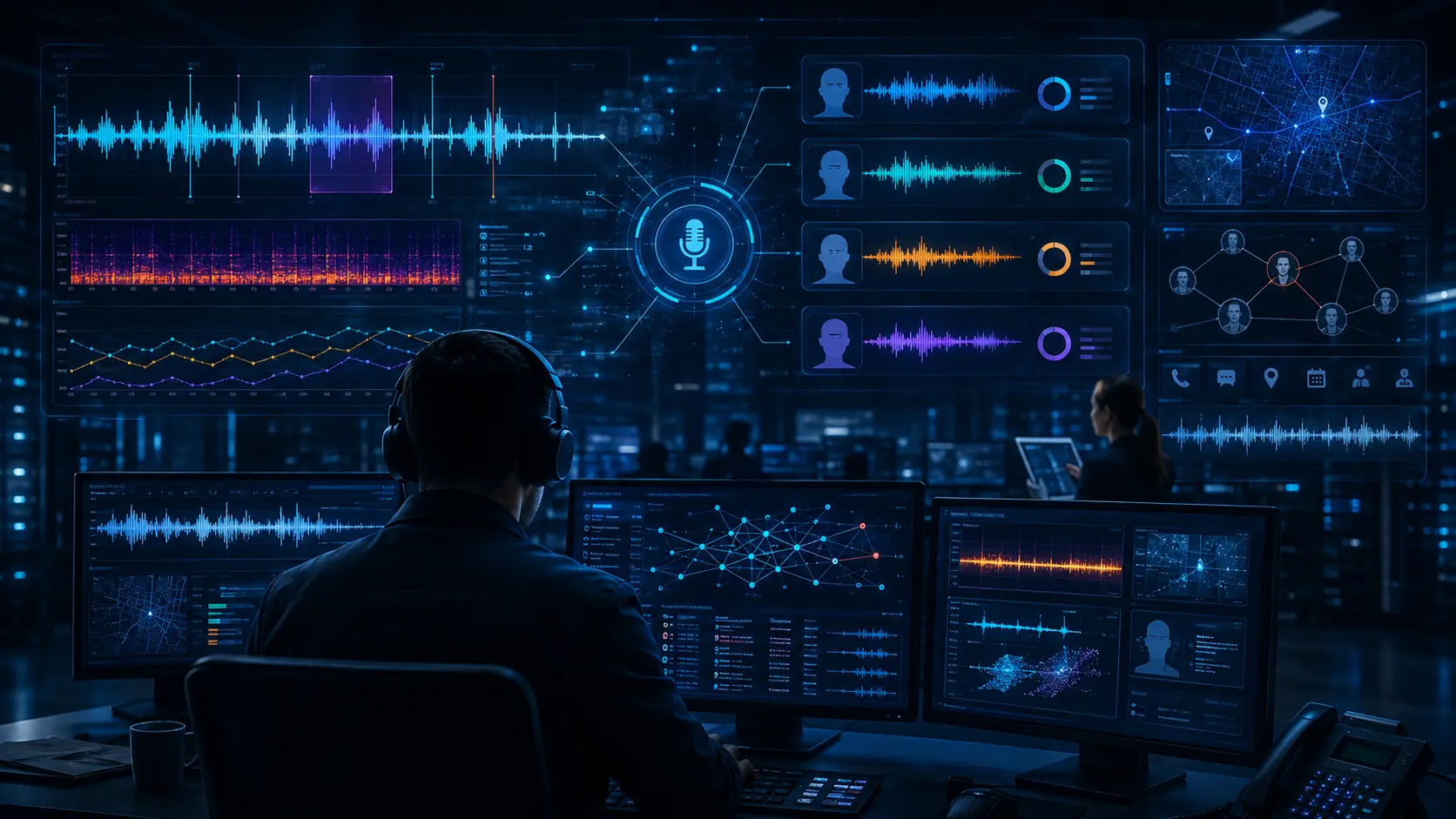
The Future of Forensic Audio Analysis with an Audio Intelligence Platform for Law Enforcement Agencies
Modern investigations are no longer limited to documents, images, or video evidence. In many cases, the most important information is hidden inside a voice recording - a suspect call, witness interview, emergency response conversation, surveillance clip, interrogation recording, or cybercrime voice note.
For law enforcement agencies, audio evidence can reveal conversations, speaker identities, intent, emotional shifts, communication patterns, and hidden links between people or events. But manually reviewing hours of recordings is slow, inconsistent, and difficult to scale. Investigators may need to identify speakers, understand multilingual conversations, detect key statements, and connect voice evidence with the larger case context.
This is where an Audio Intelligence Platform for Law Enforcement, becomes critical.
Built as part of PaladinAi’s forensic AI solutions, PhoneticAI helps investigation teams transform unstructured audio into searchable, speaker-aware, and context-rich case intelligence. By combining AI-driven transcription, speaker identification, voice pattern analysis, and sentiment & emotion analysis, it enables agencies to move beyond manual listening and toward structured forensic audio analysis.
What Is an Audio Intelligence Platform for Law Enforcement?
An Audio Intelligence Platform for Law Enforcement is an AI-powered system that helps agencies transcribe, search, analyze, and structure voice evidence. It converts raw audio recordings into searchable transcripts, speaker-separated conversations, voice pattern insights, sentiment indicators, and case intelligence for faster investigation review.
In simple terms, it turns voice data into usable investigative intelligence.
A dedicated audio intelligence platform for law enforcement helps agencies analyze recordings such as suspect calls, emergency calls, interrogation audio, witness interviews, surveillance clips, and cybercrime voice evidence. Instead of treating audio as a passive file, investigators can review it as searchable, timestamped, and structured evidence.
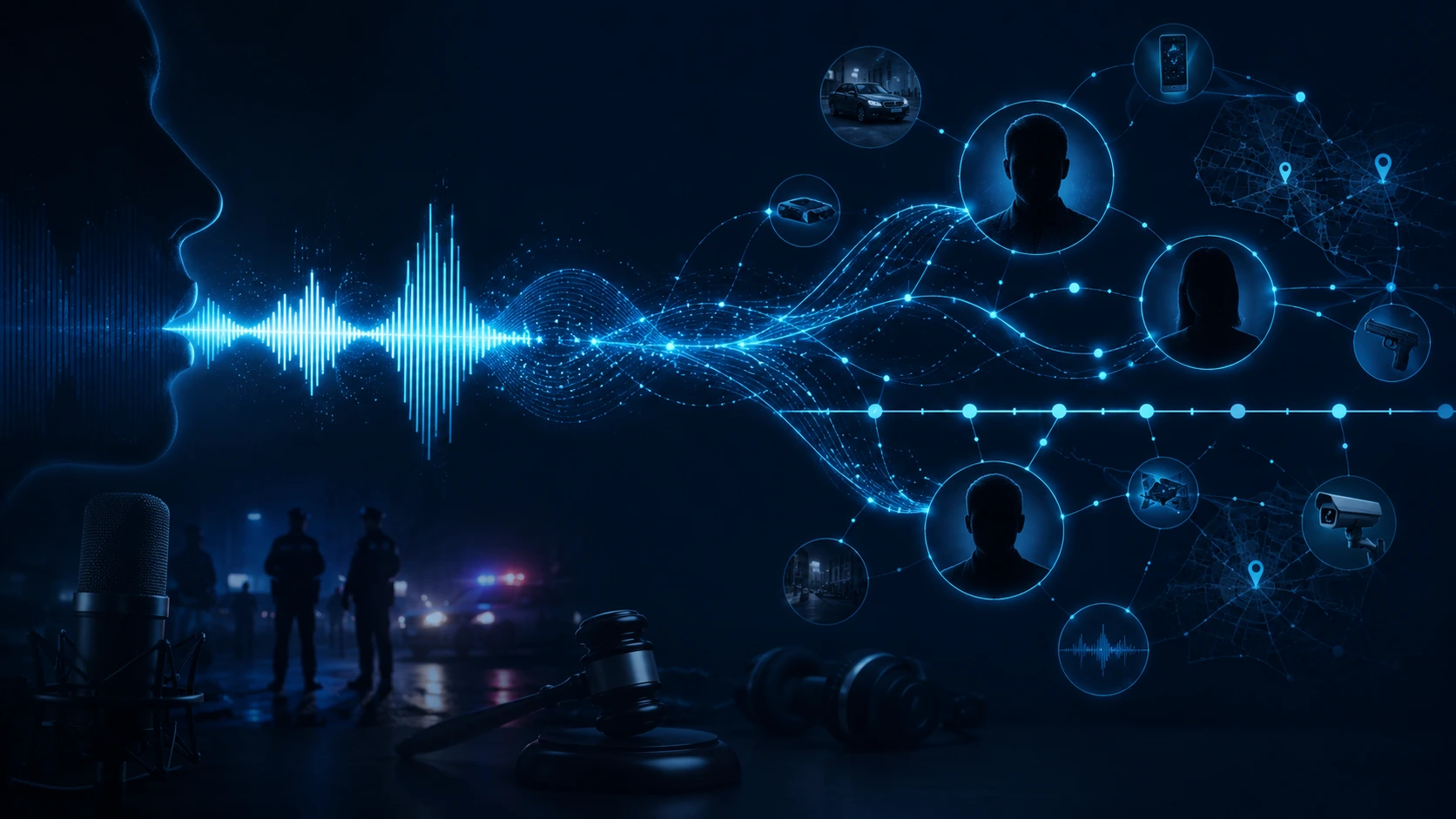
Why Forensic Audio Analysis Matters in Modern Investigations
Forensic audio analysis plays an important role in criminal investigations, digital forensics, cybercrime cases, emergency response analysis, and intelligence-led policing. A single recording may contain names, locations, instructions, threats, financial references, emotional cues, or communication patterns that are important to a case.
However, raw audio is difficult to work with. It is often noisy, multilingual, fragmented, and spread across different sources. Investigators may receive call recordings, voice notes, interrogation audio, witness statements, emergency calls, surveillance audio, or field recordings in different formats and languages.
Traditional audio evidence review depends heavily on manual listening. This creates several challenges:
| Challenge | Impact on Investigation |
|---|---|
| Long recordings | Investigators spend hours reviewing audio manually |
| Multiple speakers | It becomes difficult to understand who said what |
| Language barriers | Multilingual conversations require additional review time |
| Background noise | Important statements may be missed |
| Emotional shifts | Stress, hesitation, or urgency may not be documented clearly |
| Unstructured audio | Recordings are hard to search, organize, and connect with case evidence |
Forensic audio analysis helps solve this problem by converting voice recordings into structured intelligence. Instead of only listening to audio, investigators can search transcripts, review speaker segments, detect speech behavior patterns, and connect voice evidence with the wider investigation.
How PhoneticAI Supports Forensic Voice and Speech Analysis
PhoneticAI is PaladinAi's Speech & Voice Analytics Engine designed to transform complex audio into actionable intelligence.
For law enforcement agencies, PhoneticAI supports forensic voice and speech analysis through three key capabilities: AI-driven transcription, speaker identification, and sentiment & emotion analysis.
AI-Driven Transcription Across Multiple Languages
PhoneticAI helps convert spoken audio into searchable text. This is especially useful when investigators handle multilingual recordings, long interviews, emergency calls, suspect conversations, or surveillance audio.
With audio transcription AI, law enforcement teams can quickly review what was said without manually listening to the entire file. This supports speech-to-text for law enforcement, interview transcription, call recording analysis, and audio evidence review.
Speaker Identification for Investigative Clarity
In many investigations, knowing what was said is not enough. Investigators also need to understand who said it.
Speaker identification helps investigators map spoken segments to different participants in a recording. This makes multi-speaker conversations easier to review, understand, and document. It supports speaker diarization, forensic voice analysis, and investigative voice intelligence.
For example, in a recorded conversation involving three people, speaker identification can help analysts separate the dialogue into Speaker 1, Speaker 2, and Speaker 3. This makes the conversation easier to follow and connect with case details.
Sentiment & Emotion Analysis
Voice evidence is not only about words. Tone, hesitation, stress, urgency, anger, or fear can provide additional context.
PhoneticAI supports sentiment analysis in audio and emotion detection in voice, helping investigators identify moments where speech behavior changes. These indicators can guide analysts toward segments that may need closer human review.
From Voice Evidence to Case Intelligence
The value of an Audio Intelligence Platform for Law Enforcement lies in its ability to transform raw recordings into structured case intelligence.
A typical workflow may look like this:
| Step | Audio Intelligence Workflow |
|---|---|
| 1 | Investigator uploads or ingests audio evidence |
| 2 | System transcribes the spoken content |
| 3 | Speakers are separated and identified |
| 4 | Key timestamps and topics are highlighted |
| 5 | Sentiment and emotion signals are analyzed |
| 6 | Output becomes searchable and reviewable |
| 7 | Analyst validates insights and connects them with case evidence |
This workflow helps agencies reduce review time, improve documentation, and make audio evidence easier to connect with other investigation materials.
Instead of audio remaining locked inside a recording, it becomes searchable audio evidence that can support case timelines, suspect analysis, witness review, cybercrime investigation, and intelligence reporting.
Manual Audio Review vs AI-Powered Audio Intelligence
Manual audio review remains important, but it is no longer enough on its own. Law enforcement teams often face large volumes of audio evidence, and reviewing each file manually can delay investigations.
| Manual Audio Review | AI-Powered Audio Intelligence |
|---|---|
| Requires full manual listening | Converts recordings into searchable transcripts |
| Difficult to identify speakers quickly | Separates speakers for clearer review |
| Hard to search spoken content | Enables keyword and phrase search |
| Emotional cues may be missed | Highlights sentiment and emotion indicators |
| Time-consuming documentation | Generates structured audio intelligence reports |
| Difficult to scale across large cases | Supports faster review of high-volume audio evidence |
AI does not replace investigators. It supports them by organizing audio evidence, highlighting important sections, and making voice data easier to review.
Example: Real-Time Audio Intelligence Report for an Investigation
To understand how this works in practice, consider a sample law enforcement audio review scenario.
An investigation team receives an 18-minute recorded call related to a suspected criminal network. The audio includes multiple speakers, language switching, background noise, and references to locations and payment details.
A system like PhoneticAI can help generate a structured audio intelligence report for analyst review.
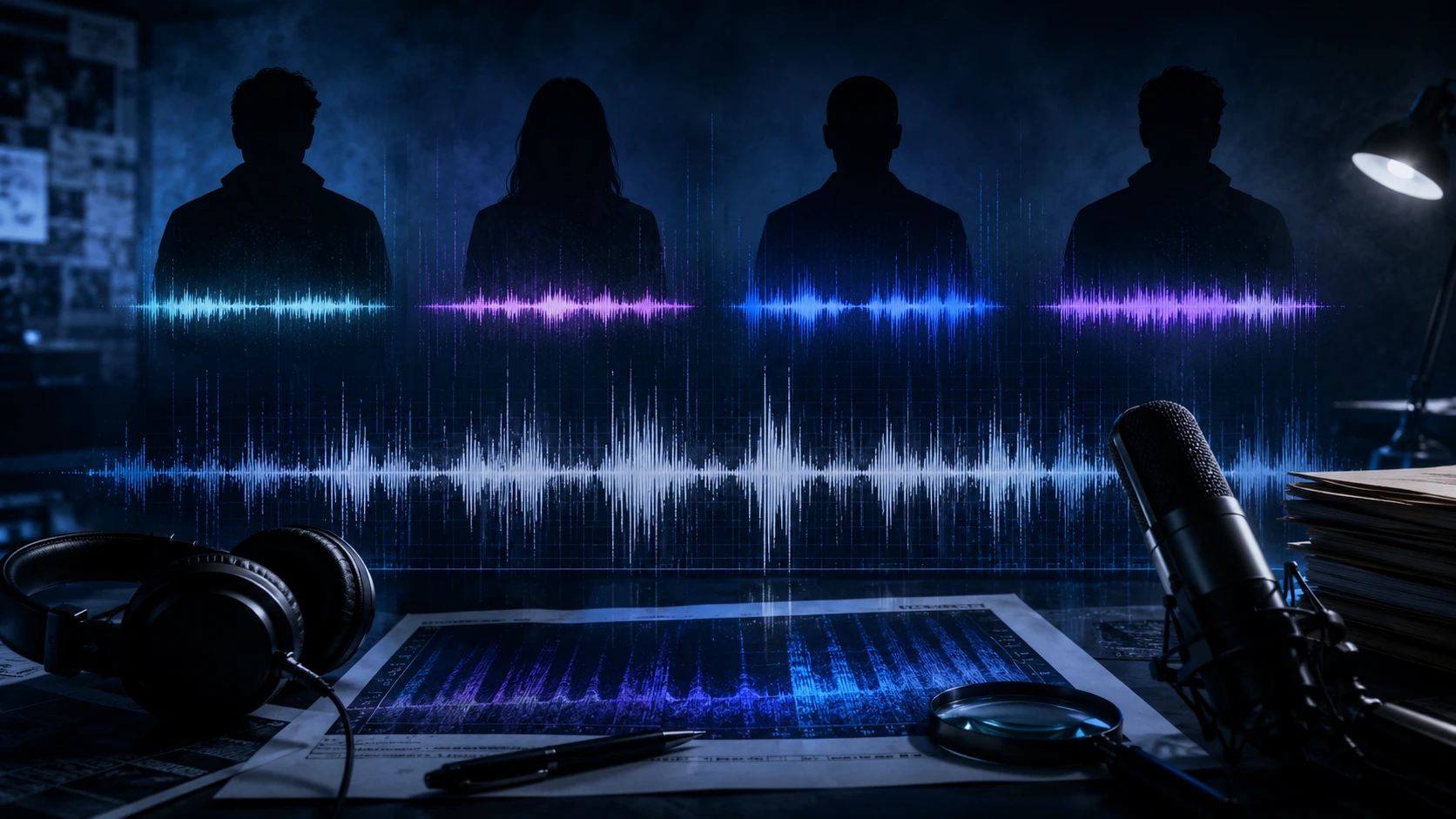
Sample Audio Intelligence Report
| Report Field | Example Output |
|---|---|
| Audio Source | Recorded suspect call |
| File Duration | 18 minutes 42 seconds |
| Audio Quality | Moderate background noise detected |
| Detected Speakers | 3 speakers |
| Primary Language | Hindi |
| Secondary Language | English |
| Transcription Status | Completed |
| Speaker Segmentation | Speaker 1, Speaker 2, Speaker 3 |
| Key Detected Topics | Meeting location, payment reference, vehicle mention |
| Sentiment Indicators | Stress detected in Speaker 2 during high-risk segment |
| Emotion Signals | Urgency, hesitation, elevated tone |
| Important Timestamp | 00:07:21 – 00:08:14 |
| Investigation Value | Potential lead requiring human review |
| Analyst Action | Review highlighted segment and correlate with case evidence |
This type of report does not make final conclusions on its own. Instead, it gives investigators a faster way to prioritize review. Analysts can jump directly to important timestamps, compare speaker segments, search transcript content, and correlate the audio with other evidence.
Key Capabilities of an AI-Powered Speech Intelligence Platform
A modern speech intelligence platform for law enforcement should support the full lifecycle of audio evidence review - from transcription to speaker-level analysis and case reporting.
| Capability | How It Helps Law Enforcement |
|---|---|
| Audio transcription AI | Converts voice recordings into searchable text |
| Voice-to-text intelligence | Helps investigators search audio like written evidence |
| Speaker identification | Clarifies who said what in multi-speaker conversations |
| Speaker diarization | Separates audio into speaker-based segments |
| Voice pattern analysis | Supports deeper review of tone, rhythm, stress, and communication patterns |
| Speech behavior analysis | Highlights emotional or behavioral changes in speech |
| Multilingual transcription | Helps agencies process recordings across different languages |
| Sentiment analysis in audio | Identifies stressed, urgent, or emotionally charged speech patterns |
| Audio data intelligence | Converts unstructured recordings into structured evidence data |
| Timestamped reporting | Helps analysts move directly to important parts of a recording |
These capabilities are especially useful when agencies manage high-volume audio data across multiple investigations.
Law Enforcement Use Cases for Forensic Audio Analysis
An Audio Intelligence Platform for Law Enforcement can support multiple investigation workflows.
Suspect Call Analysis
Recorded calls may contain names, meeting points, threats, financial references, or instructions. AI speech analysis can help investigators transcribe calls, identify speakers, and search for case-relevant terms.
Witness Interview Review
Witness interviews can be long and detailed. Audio transcription AI helps convert interviews into searchable transcripts, making it easier to find important statements and compare them with other evidence.
Interrogation Recording Analysis
Interrogation recordings may involve emotional shifts, changes in tone, hesitation, or repeated statements. Speech behavior analysis can help highlight sections that require closer human review.
Emergency Call Analysis
Emergency calls often contain urgent information. Audio intelligence can help analyze caller statements, location clues, response conversations, and emotional intensity.
Surveillance Audio Processing
Surveillance audio may include background noise, overlapping voices, or fragmented conversations. Speaker identification and searchable transcripts can help investigators structure the content.
Cybercrime Voice Evidence
Cybercrime cases may include scam calls, voice notes, impersonation attempts, social engineering conversations, and digital voice evidence. Audio data intelligence helps convert these recordings into reviewable investigation material.
Why Manual Audio Review Is No Longer Enough
Manual review is still part of forensic audio investigation, but it creates limitations when audio volume increases.
Law enforcement teams may need to process large numbers of recordings across multiple cases. Reviewing each recording manually can delay investigations and increase the risk of missing critical information. Recordings with several participants, noisy surroundings, and language shifts can make manual analysis slower and less consistent.
The main limitations of manual review include:
- Slow evidence processing
- Difficulty searching spoken content
- Inconsistent speaker tracking
- Missed verbal cues
- Limited visibility into emotional changes
- Time-consuming documentation
- Language and translation challenges
AI-assisted forensic workflows help solve these problems by giving investigators a structured starting point. Instead of replacing expert judgment, PhoneticAI supports analysts by organizing audio evidence, identifying important segments, and making voice data easier to search and review.
The Future of Audio Intelligence in Law Enforcement
The future of forensic audio analysis will be shaped by systems that combine automation, explainability, and human validation.
Law enforcement agencies need tools that can process large volumes of audio while keeping investigators in control. AI supports investigators by structuring speech data, marking speaker changes, surfacing behavioral signals, and processing multilingual audio, but human experts should validate the findings before they are used in a case.
In the future, audio intelligence will become more connected with broader investigation workflows. Voice evidence may be linked with case records, digital forensics, video evidence, communication data, and intelligence reports. This will help agencies move from isolated audio files to connected case intelligence.
Forensic audio analysis will continue to evolve from manual playback into structured, searchable, and analyst-ready intelligence.
Conclusion
Voice evidence can reveal critical information that may not appear in documents, images, or video. But without the right tools, audio remains difficult to search, analyze, and connect with investigations.
An Audio Intelligence Platform for Law Enforcement helps agencies transform raw recordings into searchable transcripts, speaker-aware insights, voice pattern analysis, and emotion-rich case intelligence.
With PhoneticAI, investigation teams can move beyond manual listening and create a faster, more structured approach to forensic voice and speech analysis. From suspect calls and witness interviews to emergency recordings and cybercrime voice evidence, PhoneticAI helps law enforcement agencies turn audio into intelligence that supports faster, clearer, and more informed investigations.
Frequently Asked Questions
Ready to experience & accerlate your Investigations?
Experience the speed, simplicity, and power of our AI-powered Investiagtion platform.
Tell us a bit about your environment & requirements, and we’ll set up a demo to showcase our technology.