
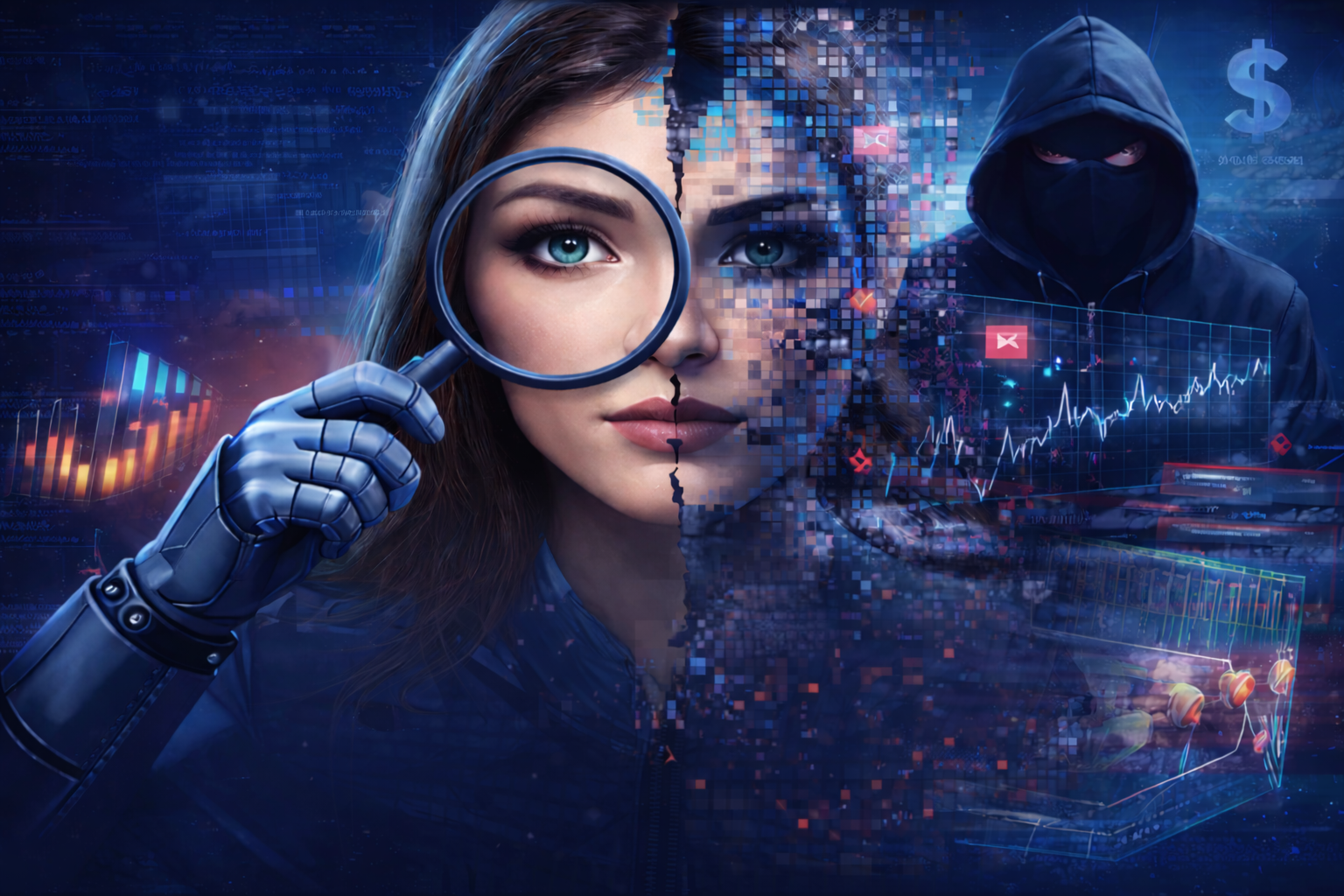
The Rise of Hyper-Realistic Deepfake Videos and the Need for Advanced Detection
The rapid evolution of artificial intelligence has transformed how digital content is created, shared, and consumed. Among these advancements, deepfake technology has emerged as one of the most disruptive and dangerous innovations. What began as low-quality face swaps has now evolved into hyper-realistic deepfake videos that are increasingly indistinguishable from real footage. As trust in digital video continues to erode, the need for reliable deepfake detection has never been more urgent.
Hyper-realistic deepfakes are no longer limited to viral social media clips or entertainment experiments. They are now actively used in fraud, misinformation campaigns, reputation damage, and intelligence manipulation. This shift has forced organizations, governments, and media platforms to rethink how video authenticity is verified in a world where seeing is no longer believing.
What Makes Today’s Deepfake Videos Hyper-Realistic
Modern deepfake videos differ significantly from earlier versions. Previously, manipulated videos were often easy to spot due to poor lip synchronization, unnatural facial movements, or visual artifacts. Today’s deepfakes, however, leverage advanced generative AI models that can accurately replicate facial expressions, skin texture, lighting, and even emotional cues.
Several factors contribute to this realism. First, AI models are now trained on massive, high-quality datasets that capture subtle human behaviors. Second, improved computing power allows these models to generate smoother transitions between frames, eliminating the jitter and distortions that once revealed fake content. Finally, audio synthesis has advanced alongside video generation, enabling near-perfect synchronization between speech and facial movement.
As a result, hyper-realistic deepfake videos can convincingly portray individuals saying or doing things that never happened, making them extremely dangerous when used maliciously.
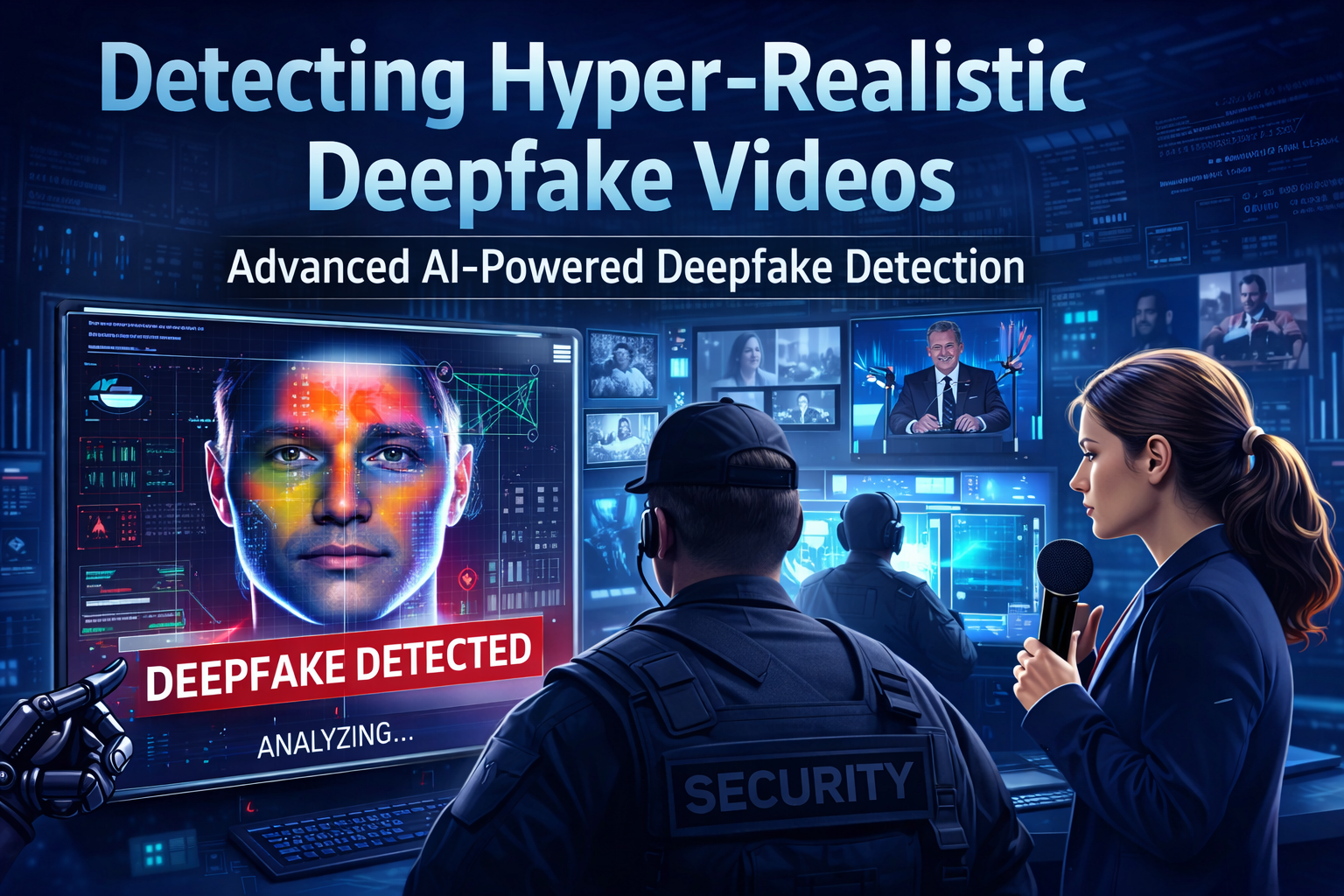
How AI Is Enabling the New Generation of Fake Videos
Artificial intelligence is at the core of modern deepfake creation. Techniques such as generative adversarial networks (GANs) and diffusion models allow systems to learn the intricate patterns of real human faces and voices. These models continuously refine their outputs by comparing generated content with real data, improving realism with every iteration.
What makes this particularly concerning is the accessibility of these tools. Deepfake creation software is no longer restricted to research labs or highly skilled engineers. Many tools are now available online, requiring minimal technical expertise to produce convincing fake videos. This democratization has dramatically increased both the volume and quality of deepfake content circulating online.
At the same time, malicious actors are using automation to generate and distribute fake videos at scale, making manual review and verification practically impossible.
Why Hyper-Realistic Deepfakes Are a Serious Security Threat
The implications of hyper-realistic deepfake videos extend far beyond entertainment or harmless experimentation. These videos pose real risks across multiple domains.
In the financial sector, deepfakes are increasingly used for impersonation scams, including fake executive messages that authorize fraudulent transactions. In the public sphere, manipulated videos are weaponized to spread misinformation, influence public opinion, and undermine trust in institutions. For individuals, deepfakes can cause severe reputational damage, emotional distress, and legal complications.
From a national security perspective, deepfakes represent a powerful tool for psychological operations and disinformation campaigns. A single convincing fake video can trigger social unrest, diplomatic tensions, or even violence before authorities have time to respond.
Why Traditional Video Verification Methods Fail
Historically, video verification relied heavily on human judgment and basic forensic techniques. Analysts looked for visual inconsistencies, metadata anomalies, or compression artifacts to determine authenticity. While these methods were effective against earlier forms of manipulation, they are no longer sufficient.
Human perception has inherent limitations, especially when confronted with high-quality synthetic media. Even trained professionals struggle to identify hyper-realistic deepfakes by sight alone. Manual verification is also slow, expensive, and impossible to scale when thousands of videos must be analyzed in real time.
Moreover, many deepfake videos are deliberately stripped of metadata or altered to bypass traditional forensic checks. As deepfake generation continues to improve, detection methods must evolve just as quickly.
How a Modern Deepfake Detection Solution Works
To counter these emerging threats, organizations are increasingly adopting a Deepfake Detection Solution designed to analyze video content using advanced artificial intelligence rather than relying on human intuition alone.
Modern deepfake detection systems operate by examining multiple layers of a video simultaneously. Instead of looking for a single telltale sign, they evaluate patterns across frames, audio streams, and behavioral cues to determine whether content has been manipulated.
AI-Based Video Frame Analysis
At the core of detection lies frame-level analysis. AI models inspect individual frames for subtle inconsistencies in facial geometry, skin texture, lighting, and edge transitions. Even when a video appears visually flawless, synthetic generation often leaves behind microscopic artifacts that can be detected by trained neural networks.
Temporal analysis further strengthens this approach by identifying irregularities across consecutive frames. These inconsistencies are often invisible to the human eye but reveal unnatural transitions that indicate manipulation.
Audio-Visual Correlation and Behavioral Signals
Another critical detection layer involves cross-verifying audio and visual elements. Hyper-realistic deepfakes may perfectly replicate a face or voice in isolation, but synchronizing both consistently remains challenging. Detection systems analyze lip movement, speech cadence, and facial muscle activity to identify mismatches.
Behavioral analysis also plays a role. Human expressions follow predictable biological patterns, and deviations from these patterns—such as unnatural blinking rates or micro-expression timing—can signal synthetic generation.
AI-Powered Fake Video Verification for Media and Public Trust
In the media ecosystem, AI-powered fake video verification has become essential for combating misinformation and preserving public trust. News organizations and digital platforms face immense pressure to verify content quickly without sacrificing accuracy.
Fake videos spread rapidly on social media, often reaching millions of viewers before fact-checkers can intervene. AI-driven verification allows media teams to analyze suspicious videos in near real time, flagging manipulated content before it goes viral.
By integrating automated deepfake detection into editorial workflows, media organizations can reduce the risk of amplifying false narratives, protect their credibility, and ensure that audiences receive accurate information.
Deepfake Detection for Threat Intelligence and Law Enforcement
Beyond media, Deepfake Detection for Threat Intelligence plays a critical role in security and law enforcement operations. Intelligence agencies increasingly encounter manipulated videos used to impersonate officials, fabricate evidence, or incite unrest.
For law enforcement, the ability to authenticate video evidence is crucial. Deepfake detection helps investigators determine whether digital media can be trusted, preventing false leads and ensuring that decisions are based on verified information. In threat intelligence contexts, early detection of manipulated media can provide advance warning of coordinated disinformation campaigns or psychological operations.
As deepfakes become a tool of choice for sophisticated adversaries, automated detection systems are becoming an essential component of modern security infrastructure.
Who Needs Deepfake Detection the Most
While the risks of deepfakes affect everyone, certain sectors face particularly high exposure. Media organizations must protect against misinformation and reputational damage. Financial institutions need to prevent impersonation and fraud. Government agencies and law enforcement must safeguard public trust and national security. Enterprises and digital platforms must ensure that the content circulating within their ecosystems is authentic.
In all these cases, deepfake detection is no longer a niche capability but a foundational requirement for digital trust.
The Future of Deepfake Detection Technology
The battle between deepfake generation and detection is an ongoing arms race. As generative models become more sophisticated, detection systems must continuously adapt. The future of deepfake detection lies in multimodal analysis, combining video, audio, metadata, and contextual intelligence to form a comprehensive authenticity assessment.
Regulatory frameworks are also beginning to emerge, requiring organizations to take responsibility for verifying digital content. As these regulations mature, adoption of advanced deepfake detection solutions is expected to accelerate across industries.
Conclusion – Trust in Digital Media Requires Intelligent Verification
Hyper-realistic deepfake videos have fundamentally changed how we perceive and trust digital content. Traditional verification methods are no longer sufficient in a landscape where AI can convincingly fabricate reality itself. Addressing this challenge requires intelligent, scalable, and automated approaches to video authentication.
By leveraging advanced AI-driven detection techniques, organizations can protect themselves against fraud, misinformation, and manipulation. In an era defined by synthetic media, trust in digital video can only be preserved through intelligent verification and proactive defense.
Frequently Asked Questions
Ready to experience & accerlate your Investigations?
Experience the speed, simplicity, and power of our AI-powered Investiagtion platform.
Tell us a bit about your environment & requirements, and we’ll set up a demo to showcase our technology.