
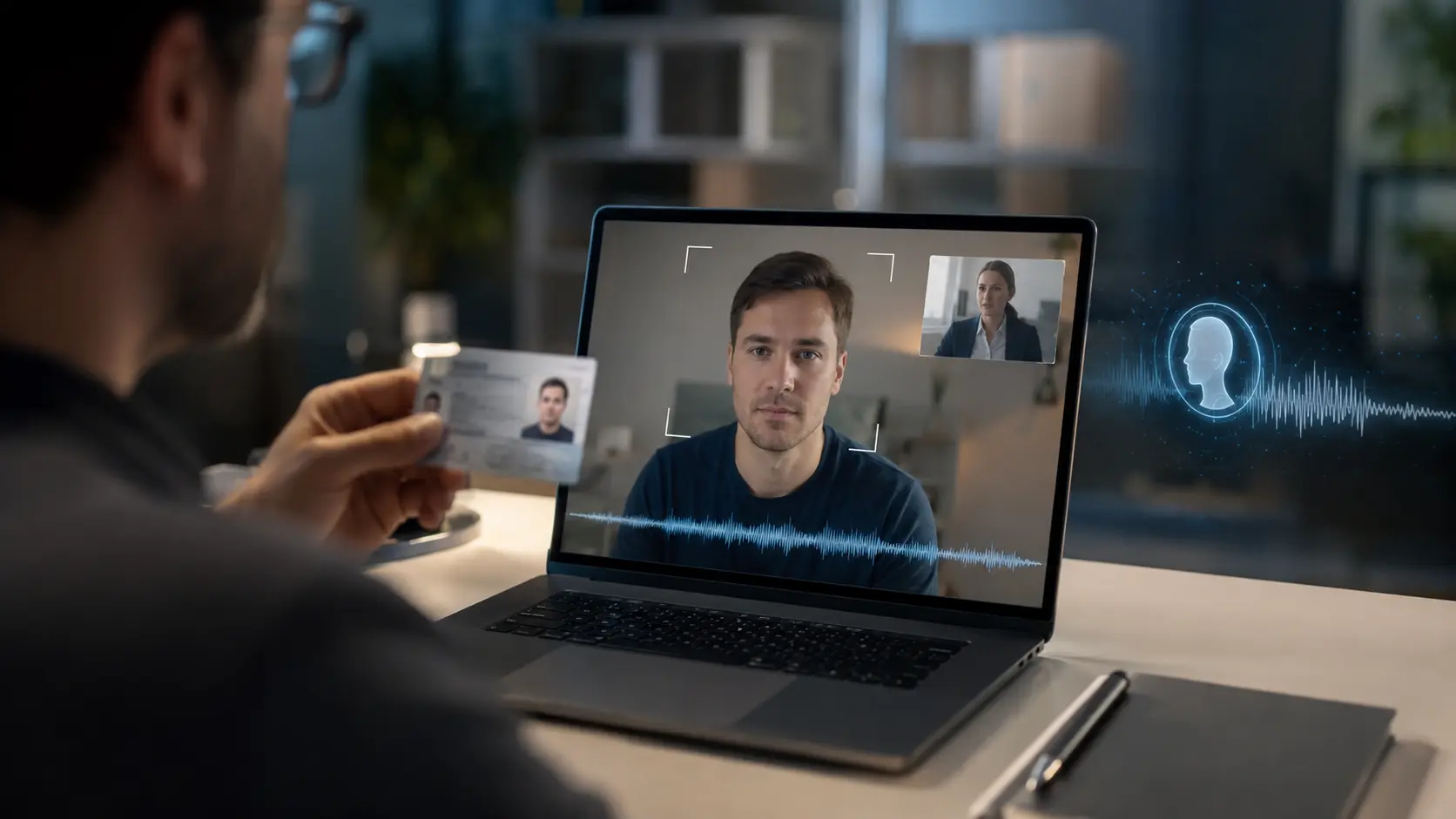
Can Voice Deepfakes Bypass KYC Verification?
Voice interactions are increasingly used during video KYC, digital onboarding, customer-support calls, account recovery, transaction confirmation, and identity-verification processes. This creates an important question for banks and financial institutions: can an AI-cloned voice be used to impersonate a genuine customer?
Modern voice-cloning systems can produce audio that resembles a person’s tone, accent, pronunciation, and speaking style. When combined with stolen customer information, manipulated identity documents, or social engineering, a cloned voice may make a fraudulent verification attempt appear more convincing.
However, sounding like a customer is not the same as proving that customer’s identity.
Banks should not rely on voice similarity alone. Effective deepfake audio detection for voice KYC requires a layered process that combines audio-authenticity analysis, unpredictable challenge-response checks, facial verification, document validation, device information, session-risk signals, customer records, and trained human review.
What Makes Voice-Based KYC Vulnerable?
Voice deepfakes may exploit KYC processes that depend on short audio samples, static passphrases, predictable questions, or a single voice-matching result. Stronger verification combines deepfake audio analysis with unpredictable spoken prompts, facial and document checks, device information, session-risk signals, and trained human review. No single audio anomaly or detection score should automatically confirm fraud.
What Is a Voice Deepfake?
A voice deepfake is AI-generated or AI-cloned audio created to imitate the voice characteristics of a real person.
A fraudster may collect voice samples from publicly available videos, interviews, presentations, social media posts, voicemail recordings, or previous conversations. Those samples may then be used to create new audio that resembles the targeted individual.
During KYC verification, a cloned voice could potentially be used to:
- Impersonate an existing customer
- Answer verification questions
- Support a fraudulent identity claim
- Request account recovery
- Change registered customer details
- Confirm a sensitive transaction
- Contact a bank’s customer-support team
- Strengthen a wider social-engineering attempt
A voice deepfake is different from a human impersonator. A human impersonator manually attempts to copy another person’s speech, while a voice deepfake uses AI-generated or cloned audio.
It is also different from a replay attack. In a replay attack, a fraudster plays an existing authentic recording. In a voice-deepfake attack, new audio is created to resemble the targeted customer.
Where Can Voice Deepfakes Affect KYC?
Voice-based manipulation may appear at several stages of a banking or financial-services workflow.
Potential points of exposure include:
- Video KYC interviews
- Digital customer onboarding
- Voice-based identity checks
- Contact-centre authentication
- Account-recovery requests
- Password-reset conversations
- Loan or credit applications
- High-value transaction confirmation
- Beneficiary-change requests
- Fraud-dispute calls
- Business-account verification
The risk increases when the verification process accepts a short voice sample, uses predictable questions, or treats a voice match as independent proof of identity.
Voice manipulation is only one part of the broader challenge of deepfake detection throughout KYC workflows. A coordinated KYC attack may combine a cloned voice with synthetic facial content, compromised customer information, altered identity documents, manipulated selfies, or deceptive video submissions.
Banks assessing these wider identity-verification risks can also review the dedicated DeepGaze use case for KYC bypass and document manipulation.
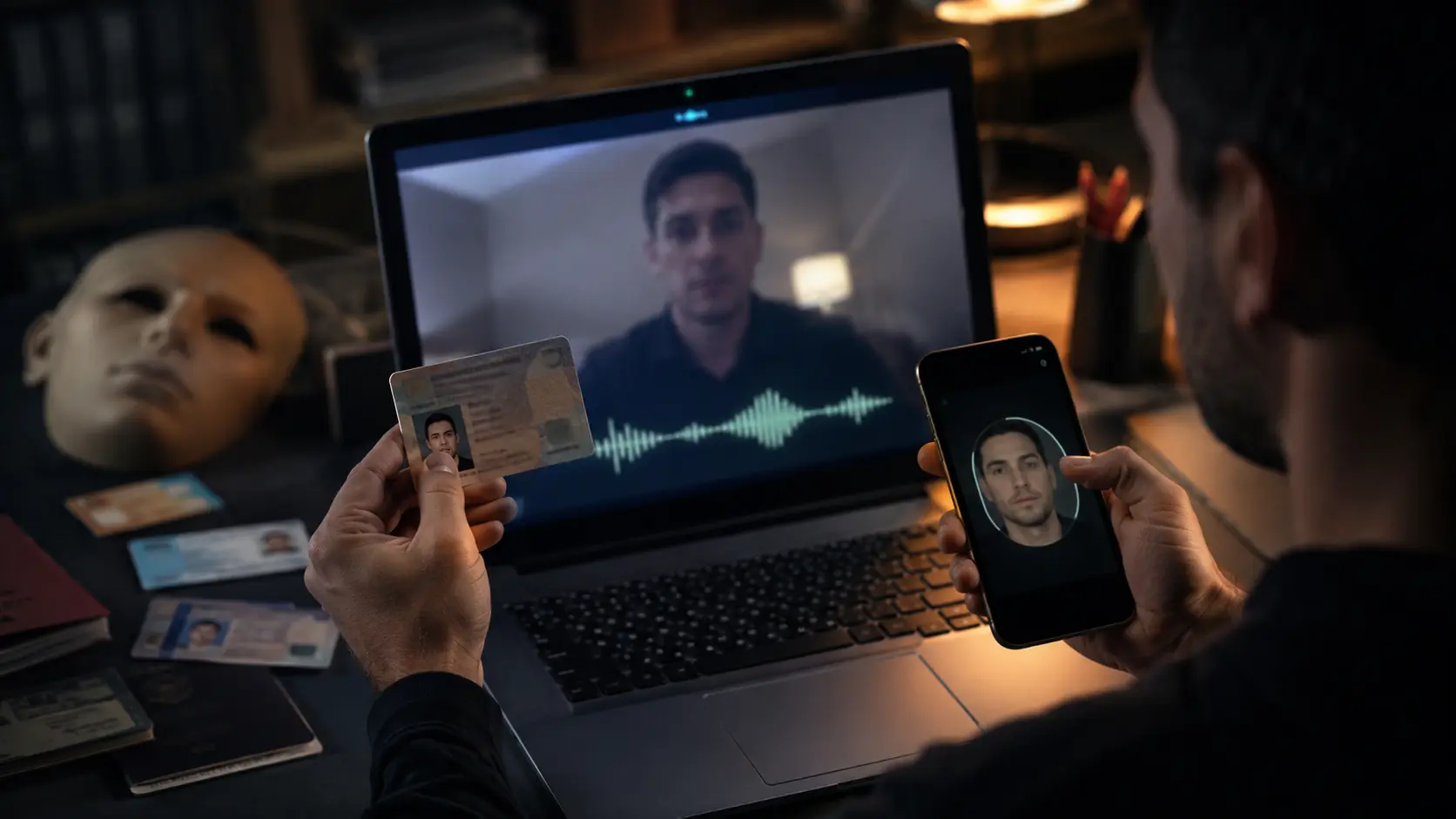
How Can Voice Deepfakes Be Used in KYC Fraud?
A cloned voice may be combined with personal information obtained through data breaches, phishing, social media, stolen documents, or earlier account-compromise attempts.
The fraudster may then use cloned audio during a verification interaction to create the impression that the genuine customer is speaking.
For example, an attacker may attempt to:
- Answer basic identity questions
- Request access to an existing account
- Change a registered phone number or email address
- Recover a password
- Approve a transaction
- Impersonate a company director
- Support a fraudulent loan application
- Claim that normal verification methods are unavailable
Social engineering may also be used to pressure a banking employee. The attacker may create urgency, claim to be travelling, report a technical problem, or insist that a payment must be processed immediately.
This is why voice authenticity should never be evaluated separately from the wider customer, device, document, and session context.
Why Are Voice-Only Verification Controls Vulnerable?
Voice-matching systems may compare a caller’s speech with a previously enrolled sample. The result may show how closely the two samples resemble each other.
However, voice similarity is not the same as identity confirmation.
A verification process can become vulnerable when it depends heavily on:
- Static passphrases
- Predictable questions
- Very short audio samples
- A single voice-comparison score
- Low-quality call recordings
- No unpredictable spoken prompts
- No facial or document comparison
- No device or session-risk analysis
- No secondary verification method
- No manual review for suspicious cases
A cloned voice may resemble the genuine customer while other elements of the interaction remain inconsistent.
Banks should therefore treat voice as one identity signal among several rather than as complete proof of identity.
What Indicators May Suggest a Voice Deepfake?
Deepfake detection systems may examine acoustic and temporal characteristics within a suspicious recording.
Potential indicators can include:
- Unnatural pauses between words
- Inconsistent breathing
- Sudden changes in tone or pitch
- Limited emotional variation
- Unusual pronunciation patterns
- Abrupt transitions between speech segments
- Changes in voice characteristics during the same recording
- Repeated or overly consistent sound patterns
- Background noise that changes unexpectedly
- Acoustic characteristics that do not match the apparent environment
- Timing that appears inconsistent with visible mouth movement
- Frequency patterns associated with generated or manipulated audio
These indicators should not be treated as automatic proof of manipulation.
Network problems, compression, poor microphones, background noise, illness, stress, regional accents, speech difficulties, and audio-processing software may create unusual characteristics in genuine speech.
When suspicious audio requires a deeper forensic examination, investigators may follow a structured process for investigating synthetic voice evidence.
Can Challenge-Response Checks Reduce Voice Deepfake Risk?
Unpredictable challenge-response checks can make prerecorded attacks more difficult.
During verification, the customer may be asked to:
- Repeat a randomly generated phrase
- Read changing numbers
- Answer an unexpected question
- Describe an item visible during the session
- Respond to a follow-up question
- Confirm information introduced during the interaction
These prompts help assess whether the person can understand and respond naturally to changing instructions.
However, challenge-response verification should not be used as the only control. Advanced AI-generated audio may be capable of responding during an active interaction.
Banks should combine spoken challenges with:
- Facial verification
- Identity-document validation
- Customer-profile checks
- Device information
- Session-risk analysis
- Secondary authentication
- Human review
The purpose is to create multiple verification barriers rather than relying on one signal.
Why Is Multimodal Verification Important?
Multimodal verification examines several forms of evidence together.
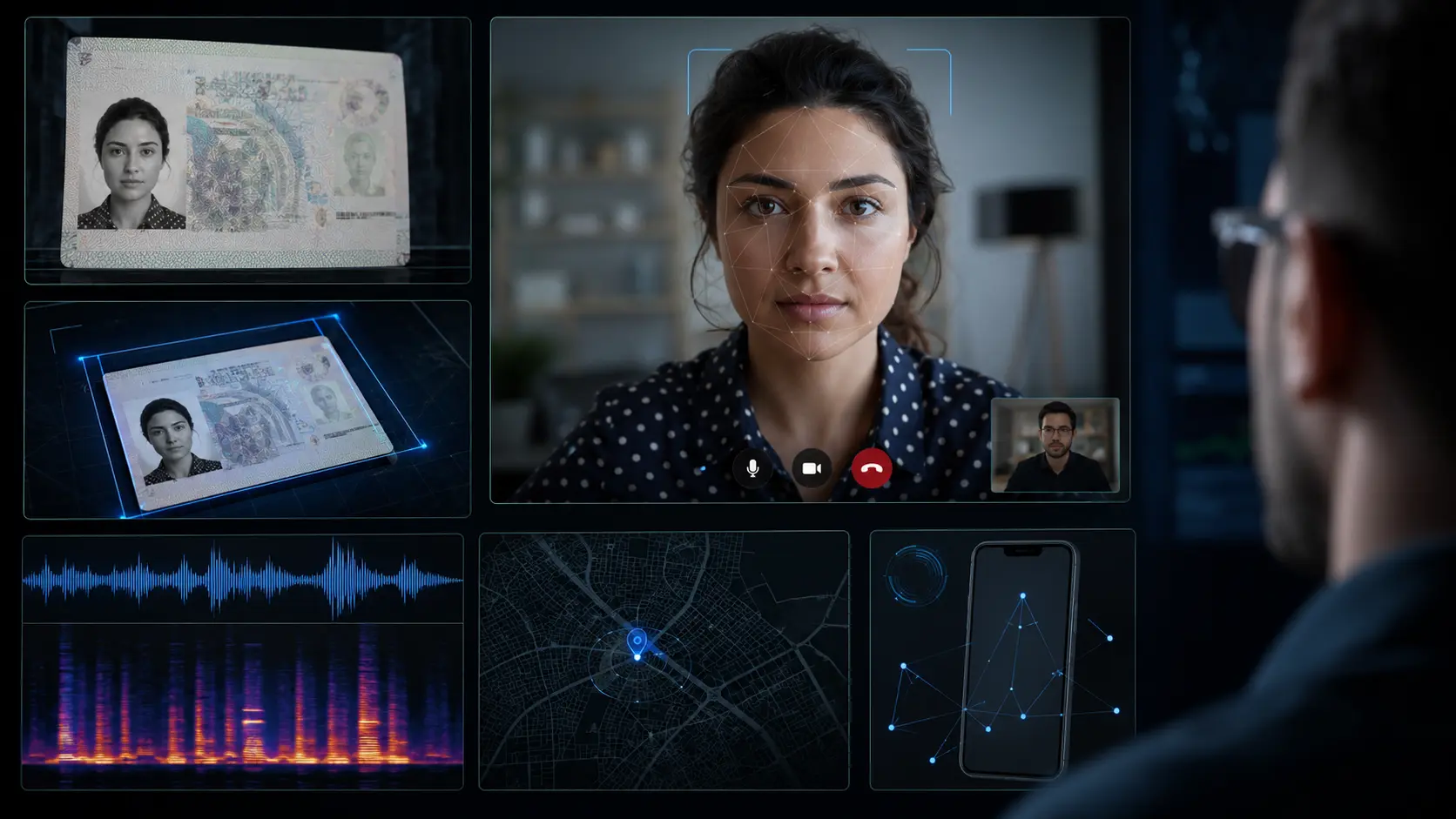
A KYC workflow may compare:
- Audio authenticity
- Facial appearance
- Mouth movement
- Identity documents
- Customer-profile information
- Device details
- Session location
- Previous account behaviour
- Responses provided during the interaction
For example, the audio may resemble the genuine customer while the visible mouth movement does not align with the spoken words.
In another case, the audio and video may appear consistent, but the device or account activity may differ significantly from the customer’s normal behaviour.
A layered KYC workflow supported by enterprise-grade deepfake detection technology can help authorized teams examine audio, video, and image-based authenticity indicators together instead of depending on a single signal. The findings should still be reviewed alongside KYC policy, customer records, identity documents, device information, session behaviour, fraud indicators, supporting evidence, and trained human judgment.
The final identity decision should still consider KYC policy, customer records, fraud indicators, supporting evidence, and trained human judgment.
How Can Banks Reduce False Positives?
False positives can delay onboarding, inconvenience genuine customers, increase review workloads, and result in inappropriate restrictions.
Several legitimate conditions may make genuine speech appear unusual:
- Weak network connectivity
- Low-quality microphones
- Background noise
- Call compression
- Regional accents
- Speech difficulties
- Emotional stress
- Voice changes caused by illness
- Noise-reduction software
- Poor recording conditions
Banks can reduce false positives by:
- Assessing audio quality before interpreting results
- Considering multiple indicators
- Comparing findings across different verification channels
- Allowing an inconclusive result
- Reviewing suspicious cases manually
- Considering legitimate alternative explanations
- Using secondary verification methods
- Avoiding automatic rejection based on one score
A detection result should guide further review rather than replace the complete KYC decision.
What Happens When the Audio Quality Is Poor?
Poor-quality audio can limit the reliability of deepfake analysis.
Compression may remove subtle acoustic information. Background noise may interfere with speech patterns. A short recording may not provide enough material for meaningful analysis. Network interruptions may also introduce pauses or distortions that resemble manipulation.
A responsible assessment may classify the recording as:
- Suitable for analysis
- Limited but still usable
- Insufficient for a reliable conclusion
An insufficient result does not mean that the audio is genuine or fraudulent. It means that the available recording does not contain enough reliable information to support a strong assessment.
The bank may need to request a clearer recording, repeat verification through a different channel, or collect additional supporting evidence.
How Should a Suspicious KYC Session Be Escalated?
When a KYC interaction contains suspicious audio, the bank should follow a documented escalation process.
This may include:
- Preserving the original audio or video recording.
- Recording the date, time, customer details, and session reference.
- Retaining relevant device and network information.
- Documenting suspicious responses or timestamps.
- Reviewing facial and identity-document verification results.
- Comparing the session with trusted customer information.
- Conducting secondary verification through an independent channel.
- Referring the case to an authorized fraud, compliance, or forensic reviewer.
- Recording alternative explanations and analytical limitations.
- Documenting the final decision and actions taken.
A suspicious automated finding should result in further review rather than an unsupported assumption that fraud has occurred.
What Should a Voice Deepfake KYC Report Include?
A structured report helps fraud, compliance, investigation, and security teams understand how an assessment was reached.
The report may include:
- Case or session reference
- Date and time of verification
- Source of the recording
- File format and duration
- Audio-quality assessment
- File-integrity information
- Detection tools and versions used
- Examination steps
- Indicators identified during analysis
- Challenge-response observations
- Facial and document-verification findings
- Device and session-risk information
- Relevant timestamps
- Alternative explanations considered
- Analyst observations
- Confidence interpretation
- Limitations
- Final assessment
- Recommended next action
The report should explain the findings and their limitations instead of presenting only a detection score or binary label.
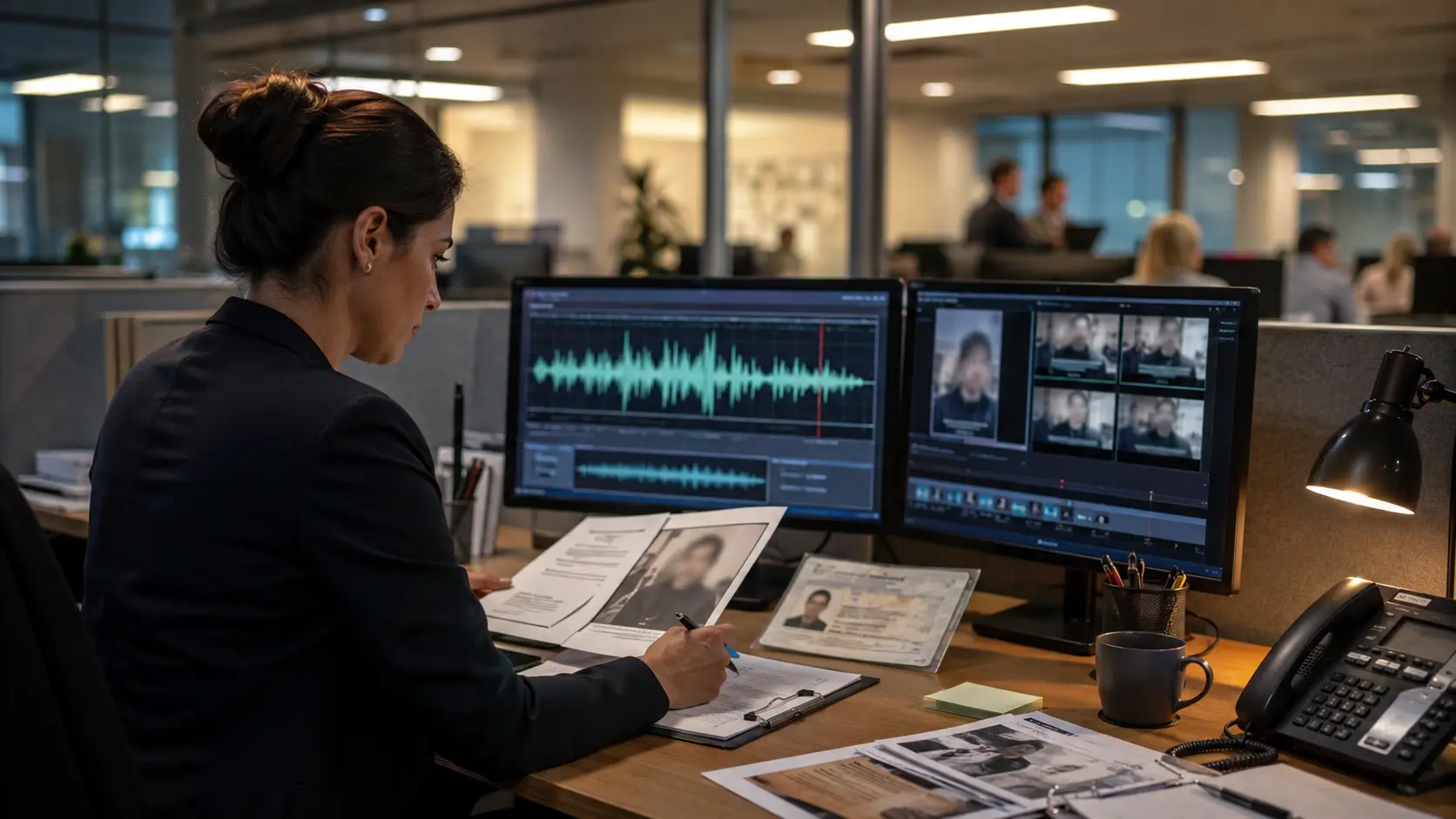
How Does DeepGaze Support Voice Deepfake Detection for KYC?
DeepGaze supports the media-authenticity stage of a KYC investigation by analysing suspicious audio for indicators associated with AI-generated, cloned, or manipulated voice content.
Within a wider KYC workflow, DeepGaze can support authorized teams by:
- Examining suspicious audio for deepfake indicators
- Supporting the assessment of suspected cloned voices
- Analysing audio alongside video and image evidence
- Providing explainable findings for analyst review
- Supporting structured forensic reporting
- Enabling secure deployment according to organizational requirements
DeepGaze does not replace identity-document verification, customer due diligence, challenge-response checks, fraud investigation, regulatory judgment, or human review.
Its role in this workflow is specifically focused on media authenticity and deepfake detection.
DeepGaze should not be presented as providing transcription, translation, speaker identification, sentiment analysis, emotion analysis, or other PhoneticAI audio-intelligence capabilities.
Its output should be considered alongside recording quality, customer information, facial and document evidence, device signals, session behaviour, supporting evidence, and clearly documented limitations.
Voice Deepfake Detection Checklist for Banks
Before completing a voice-based KYC decision, confirm whether the organization has:
- Assessed the quality of the recording
- Identified whether the process depends too heavily on voice
- Used unpredictable spoken prompts
- Checked for replay and deepfake indicators
- Compared the audio with visible mouth movement where applicable
- Verified identity documents
- Reviewed customer-profile information
- Assessed device and session-risk signals
- Preserved the original recording
- Documented suspicious responses or timestamps
- Considered legitimate alternative explanations
- Allowed an inconclusive result
- Escalated high-risk cases for human review
- Recorded the final assessment and limitations
Conclusion
Voice deepfakes can create serious risks for KYC processes that rely heavily on static voice samples, predictable questions, or a single matching score.
Banks should not treat a realistic-sounding voice as independent proof of identity. Stronger verification combines deepfake audio analysis with unpredictable challenge-response checks, facial verification, document validation, device and session information, customer-history review, and human judgment.
Effective deepfake audio detection for voice KYC is not about forcing every recording into a genuine-or-fake category. It is about identifying suspicious indicators, understanding the quality and limitations of the evidence, and making a clear, reviewable, and defensible identity-verification decision.
Frequently Asked Questions
Ready to experience & accerlate your Investigations?
Experience the speed, simplicity, and power of our AI-powered Investiagtion platform.
Tell us a bit about your environment & requirements, and we’ll set up a demo to showcase our technology.