

When Should Enterprises Verify Audio, Video, or Images for Deepfakes?
Enterprises rely on digital media for everyday decisions. Executives approve requests over video calls, vendors send voice messages, employees submit identity documents, security teams review recordings, and communications teams respond to images and videos circulating online.
The challenge is that seeing or hearing something is no longer enough to establish that it is authentic.
However, this does not mean every image, recording, or video entering an organization needs to undergo deepfake analysis. Enterprises should prioritize verification when the authenticity of digital media could influence a financial, security, identity, legal, reputational, or operational decision.
A risk-based approach to Deepfake Detection for Enterprises can help organizations determine when media should be trusted, when additional verification is appropriate, and when suspicious content should be escalated for further review.
When Does Digital Media Become a Business Risk?
Digital media becomes a business risk when an organization may take an important action based on what the media appears to show.
A routine internal image may require little scrutiny. A video apparently showing the CEO authorizing a confidential transaction presents a completely different level of risk.
Enterprises should therefore consider two questions:
- Is there uncertainty about whether the media is authentic?
- Could trusting the media lead to a meaningful business consequence?
If both answers are yes, additional verification may be appropriate.
The consequences could include transferring money, sharing confidential information, approving account access, confirming an identity, responding publicly to an alleged statement, or making an investigative decision.
7 Situations When Enterprises Should Verify Media for Deepfakes
Organizations can make deepfake verification more manageable by defining clear situations that trigger additional scrutiny.
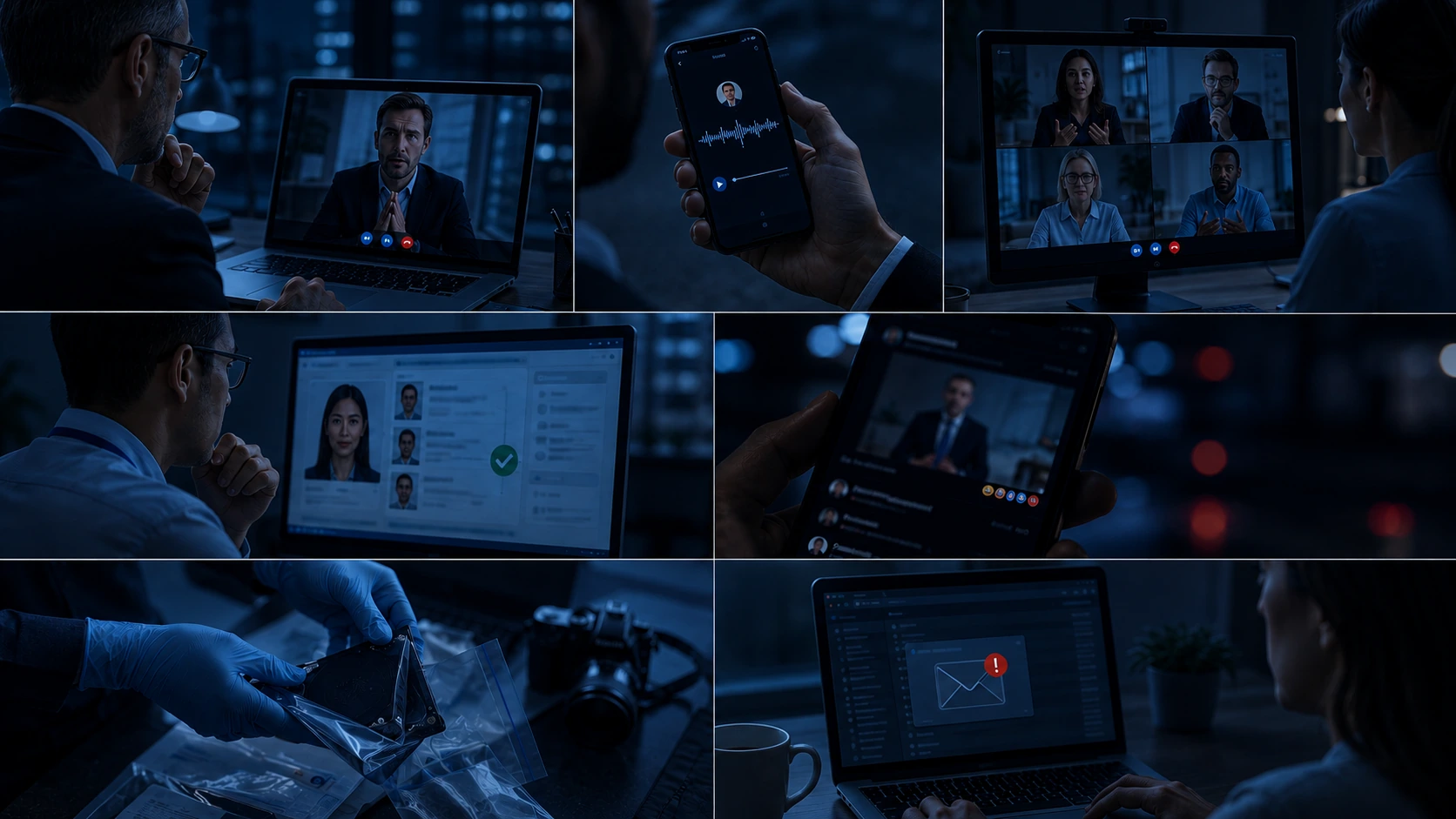
1. An Executive Requests a High-Risk Action
Executive impersonation can become particularly dangerous when an apparent request involves money, privileged information, system access, or an exception to normal procedures.
For example, an employee may receive a video or voice message apparently from a senior executive asking them to:
- approve an urgent payment;
- disclose confidential information;
- change existing financial instructions;
- provide login credentials;
- bypass an established approval process.
The fact that a message appears to contain a familiar face or voice should not automatically establish the identity of the sender.
When an unusual request has significant consequences, organizations should verify the request through an independent and trusted communication channel before taking action.
This is particularly important when dealing with potential executive impersonation attacks.
2. A Voice Message or Call Creates Financial Urgency
Voice communication is often trusted because people recognize the speaking style, tone, or voice of colleagues and executives.
AI-generated or manipulated audio can weaken that assumption.
A voice message deserves additional scrutiny when it combines identity claims with urgency, secrecy, financial pressure, or instructions that fall outside normal business procedures.
Examples include an apparent executive asking for an immediate transfer or a supplier supposedly providing new banking instructions by voice.
Organizations should avoid treating voice familiarity as sufficient proof of identity. Independent confirmation remains important when the requested action carries meaningful financial or security risk.
Where authenticity remains uncertain, audio deepfake detection can form part of the broader verification process.
3. A Video Meeting Involves Sensitive Decisions
Video meetings have become a normal part of enterprise communication, but visual presence should not automatically be treated as proof that every participant is genuine.
Additional verification may be appropriate when a remote meeting involves:
- significant financial approvals;
- highly confidential information;
- privileged account access;
- changes to payment instructions;
- strategic business decisions;
- sensitive negotiations.
The purpose is not to distrust every video meeting. Instead, enterprises should apply stronger verification controls when the consequences of impersonation are unusually high.
If unusual behavior, unexpected participants, procedural changes, or suspicious requests appear during a high-risk meeting, the organization should pause the requested action and independently verify the individuals involved.
Video deepfake detection may support the review of suspicious video content when authenticity becomes an important factor in the decision.
4. Identity Media Is Used to Grant Access or Approval
Images and video are increasingly used in digital onboarding, account recovery, employee verification, contractor access, and other identity-related processes.
The level of scrutiny should increase when submitted media is connected to valuable access or sensitive permissions.
For example, additional verification may be justified when identity media is being used to:
- recover a privileged account;
- authorize sensitive access;
- confirm a high-risk transaction;
- verify a new external partner;
- change important account information.
Organizations should avoid relying on a single visual identity signal when the potential impact of an incorrect decision is significant.
5. An Executive or Brand Appears in Unexpected Public Media
Not every deepfake threat arrives directly through corporate communication channels.
An organization may discover a video, image, or audio clip online that appears to show an executive making an unexpected announcement or controversial statement.
Possible scenarios include:
- a supposed CEO announcement;
- an alleged product or acquisition statement;
- a fabricated executive interview;
- manipulated footage connected to a breaking event;
- fake corporate communications circulating on social media.
Responding too quickly can amplify false information.
Before confirming, denying, reposting, or publicly responding to questionable media, communications and security teams should first establish what is known about its origin and authenticity.
Where images themselves are suspicious, image deepfake detection can support a broader media-verification process.
6. Media Becomes Part of an Investigation or Dispute
Audio, video, and images may also become relevant to internal investigations, fraud cases, compliance reviews, security incidents, or legal disputes.
In such cases, the first step should be to preserve and manage the available media carefully.
Teams should, where practical:
- preserve the received file;
- record where it originated;
- document how it was obtained;
- avoid unnecessary modification;
- maintain a record of review and escalation.
Detection findings should be considered alongside other investigative evidence instead of being treated as the final outcome on their own.
This is where forensic media verification becomes particularly relevant for organizations handling potentially consequential digital evidence.
7. Suspicious Media Arrives From an Unknown or Untrusted Source
Source matters.
An unsolicited file from an unknown account creates a different risk profile from media retrieved directly from a trusted internal system.
Additional verification may be appropriate when important media arrives through:
- anonymous accounts;
- unknown messaging contacts;
- forwarded files with unclear origins;
- unverified social profiles;
- unofficial communication channels;
- third-party screenshots or recordings.
An unknown source does not automatically mean that the media is fake. However, source uncertainty combined with high business impact should increase the priority for verification.
Which Media Should Enterprises Prioritize First?
Enterprises do not need to treat every media file equally. Verification priority should reflect both authenticity uncertainty and potential business impact.
| Situation | Media Type | Primary Risk | Verification Priority |
|---|---|---|---|
| Executive requests a large payment | Audio or video | Financial fraud | Very High |
| Request for privileged access | Video or image | Security compromise | Very High |
| Unexpected CEO statement circulates publicly | Video or audio | Reputation and misinformation | High |
| Supplier changes payment details | Audio or video | Financial fraud | Very High |
| Media becomes investigation evidence | Audio, video or image | Legal or investigative impact | High |
| Routine internal communication | Mixed | Limited impact | Lower |
| Verified marketing content | Video or image | Brand risk | Context dependent |

A risk-based model allows security teams to concentrate resources where an incorrect authenticity decision would have the greatest consequences.
What Should Enterprises Do Before Trusting Suspicious Media?
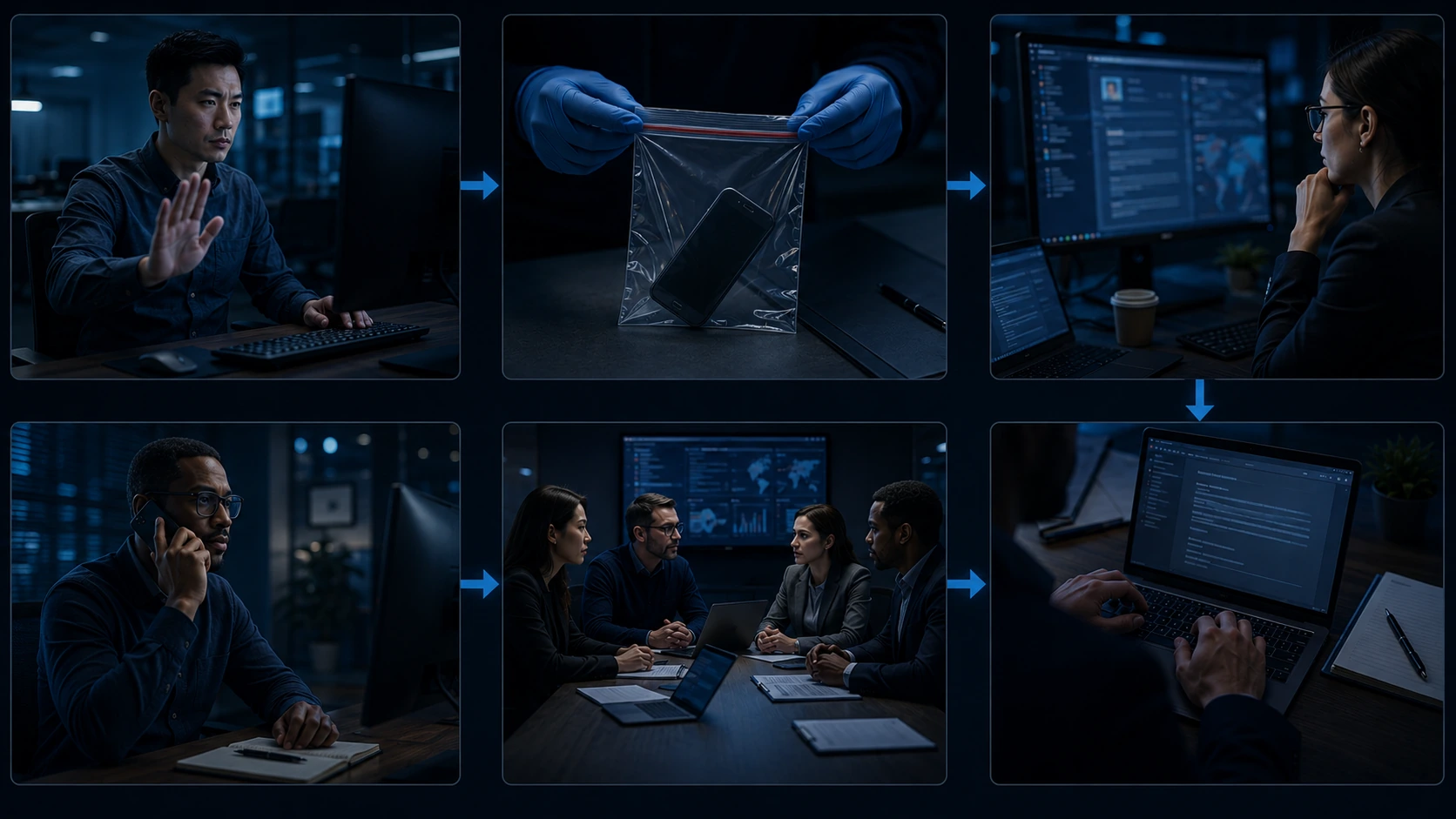
When questionable media could influence an important decision, organizations need a repeatable response process.
First, pause the requested action. A high-risk payment, access change, disclosure, or public response should not proceed solely because a video or voice appears authentic.
Second, preserve the available media. Keeping the received version can provide useful context for subsequent review.
Third, examine the source. Determine how the content reached the organization and whether the source can be independently validated.
Fourth, verify the claimed identity through another trusted channel. Contact the individual using established contact information rather than responding through the same suspicious channel.
Fifth, consider deepfake detection software when the media cannot be confidently verified and the potential impact warrants additional review.
Sixth, escalate according to business impact. Security, fraud, legal, communications, compliance, or other teams may need to become involved depending on the situation.
Finally, document the outcome. Recording how suspicious media was handled can support future investigations and help improve internal procedures.
Who Should Be Responsible for Deepfake Verification?
Responsibility for suspected deepfake incidents may vary depending on the nature and impact of each case.
Responsibility should follow the business risk involved.
| Scenario | Likely Teams Involved |
|---|---|
| Executive impersonation | Security or SOC |
| Payment fraud | Finance, fraud and security |
| Identity verification | Identity, fraud or security |
| Fake public executive statement | Communications and security |
| Employee-related incident | HR and security |
| Investigative evidence | Investigation or forensic teams |
| Compliance concern | Compliance and security |
A clearly defined escalation process is often more useful than assigning every case to one department.
Security teams may initially identify the threat, but communications, finance, legal, fraud, HR, or compliance teams could own the business decision that follows.
When Should Enterprises Use Deepfake Detection Software?
Enterprise deepfake detection software is most useful when media authenticity remains uncertain and the consequences of trusting manipulated content are meaningful.
That may include suspicious executive communications, high-value approvals, identity-related requests, questionable public media, security incidents, or investigative evidence.
The role of a deepfake detection solution should be considered within the wider verification process rather than as a replacement for organizational controls.
Enterprises may still need to confirm identities independently, follow approval procedures, preserve evidence, assess context, and involve human reviewers when a decision has significant consequences.
Building a Risk-Based Deepfake Verification Policy
A simple principle can help enterprises determine when verification is necessary:
Authenticity uncertainty + meaningful consequence = verification trigger
Consider three examples.
A voice message from an executive requests an unusually large payment. The identity is uncertain and the financial consequence is significant. Verification should be prioritized.
A standard training image stored in a trusted internal system is unlikely to require additional verification when no significant business action depends on it.
A video apparently showing the CEO making an unexpected market-sensitive announcement begins circulating publicly. Both authenticity uncertainty and potential reputational impact are high. Verification should become a priority.
This approach prevents organizations from trying to analyze everything while still applying stronger controls where synthetic media could cause meaningful harm.
Conclusion
Enterprises do not need to verify every audio file, image, or video they encounter.
They do need clear rules for identifying situations where trusting manipulated media could lead to financial loss, unauthorized access, identity fraud, legal complications, investigative errors, operational disruption, or reputational damage.
The most effective approach is to connect deepfake verification to business risk.
When digital media is being used to establish identity, authorize an important action, support an investigation, influence a sensitive decision, or communicate something consequential, its authenticity deserves greater scrutiny.
A Deepfake Detection Platform can support this process by giving enterprises a dedicated way to examine suspicious audio, video, and images as part of a wider security and verification workflow.
Frequently Asked Questions
Ready to experience & accerlate your Investigations?
Experience the speed, simplicity, and power of our AI-powered Investiagtion platform.
Tell us a bit about your environment & requirements, and we’ll set up a demo to showcase our technology.