
How Are Diffusion Models Changing Video Deepfake Detection?
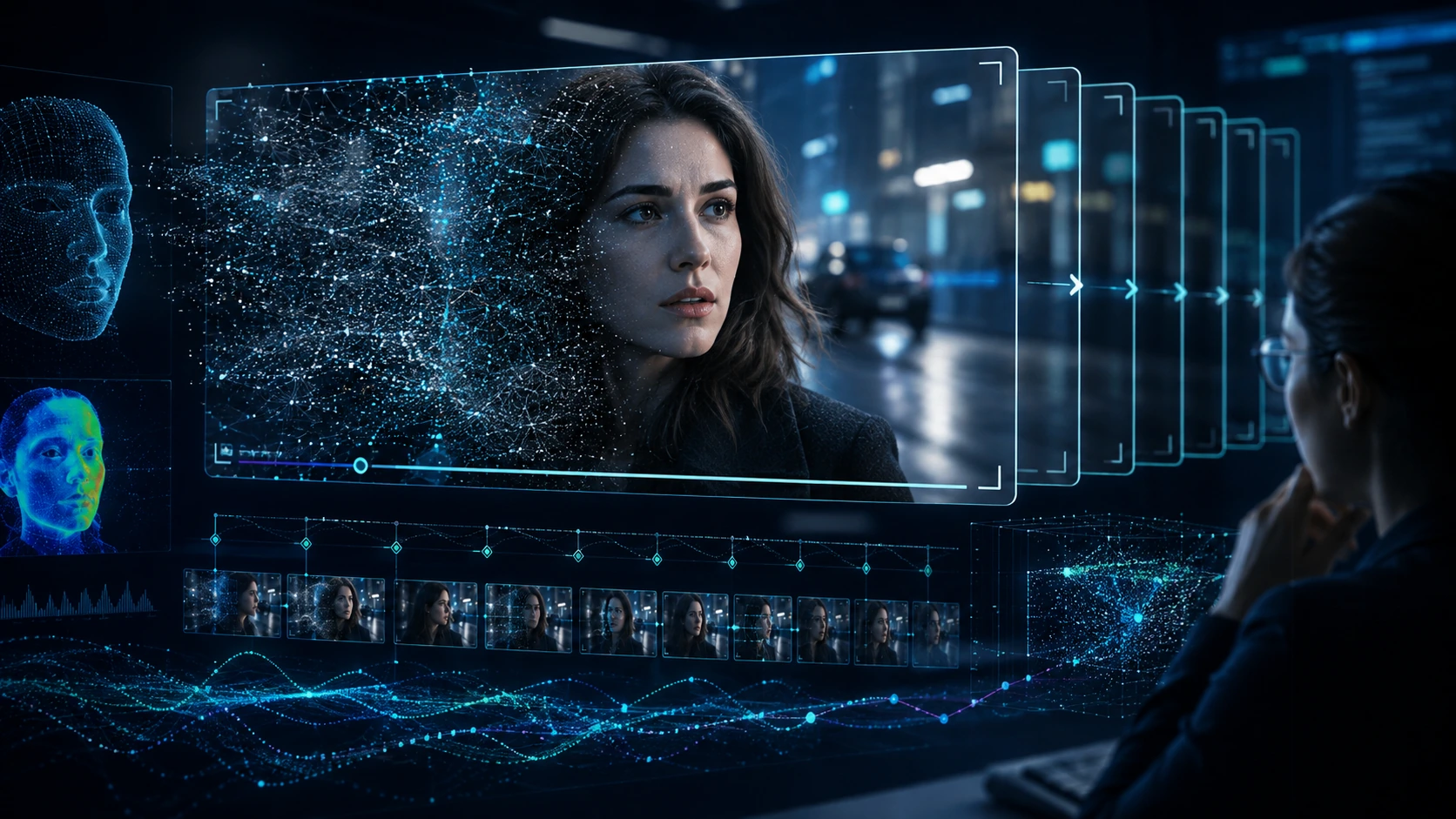
Diffusion models are generative AI systems that can create highly realistic synthetic visual content by learning to transform noise into structured images or video. Their growing use in video generation is changing deepfake detection because detection systems must increasingly handle new generation architectures, stronger visual consistency, unfamiliar synthetic patterns, and videos that may be generated almost entirely by AI rather than simply having one face manipulated.
For investigators, enterprises, media organizations, and cybersecurity teams, the key issue is not that diffusion models make detection impossible. The challenge is that video generation is evolving quickly, so detection must generalize beyond the manipulation patterns associated with earlier deepfake techniques.
What Is a Diffusion Model?
A diffusion model is a type of generative AI model that learns how to create new content through a progressive denoising process.
In simplified terms, noise is introduced during training, and the model learns how to reverse that process. When generating new content, it can start from noise and progressively form a structured visual output.
The same broader concept has been extended from images to video.
Video generation is more complex because a convincing sequence must maintain consistency not only within individual frames but also across time. People, objects, backgrounds, lighting, camera movement, and scene details need to remain visually coherent as the video progresses.
This makes modern synthetic video substantially different from some earlier deepfake scenarios that primarily involved replacing or manipulating a face inside genuine footage.
How Are Diffusion Models Different From GANs?
Generative Adversarial Networks, or GANs, played a major role in earlier synthetic media generation.
GANs generally involve two neural networks working against each other: one produces synthetic content while another attempts to distinguish generated content from real examples.
Diffusion models use a different generation process based on progressive denoising.
For deepfake detection, the important difference is not simply GAN vs diffusion. The larger issue is that different generation architectures can leave different characteristics in synthetic media.
| Area | Earlier GAN-Focused Environment | Diffusion-Generation Environment |
|---|---|---|
| Generation approach | Adversarial generation | Progressive denoising and related approaches |
| Common synthetic-media focus | Face generation and manipulation | Images, scenes and increasingly complete videos |
| Detection challenge | Recognizing familiar manipulation indicators | Generalizing across rapidly changing generators |
| Frame analysis | Important | Still important |
| Temporal analysis | Useful | Increasingly important for synthetic video |
| Unknown generators | A concern | A major operational challenge |
| Post-processing | Can alter useful evidence | Remains an important consideration |
This does not mean every diffusion-generated video is harder to detect than every GAN-generated deepfake.
Detection difficulty depends on the generator, the detector, the video quality, post-processing, and whether the detection system has encountered similar synthetic content before.
Why Are Diffusion Models Changing Video Deepfake Detection?
Traditional discussions of deepfakes often focus on manipulated faces.
For example, genuine footage might be altered so that one person's face appears to belong to someone else.
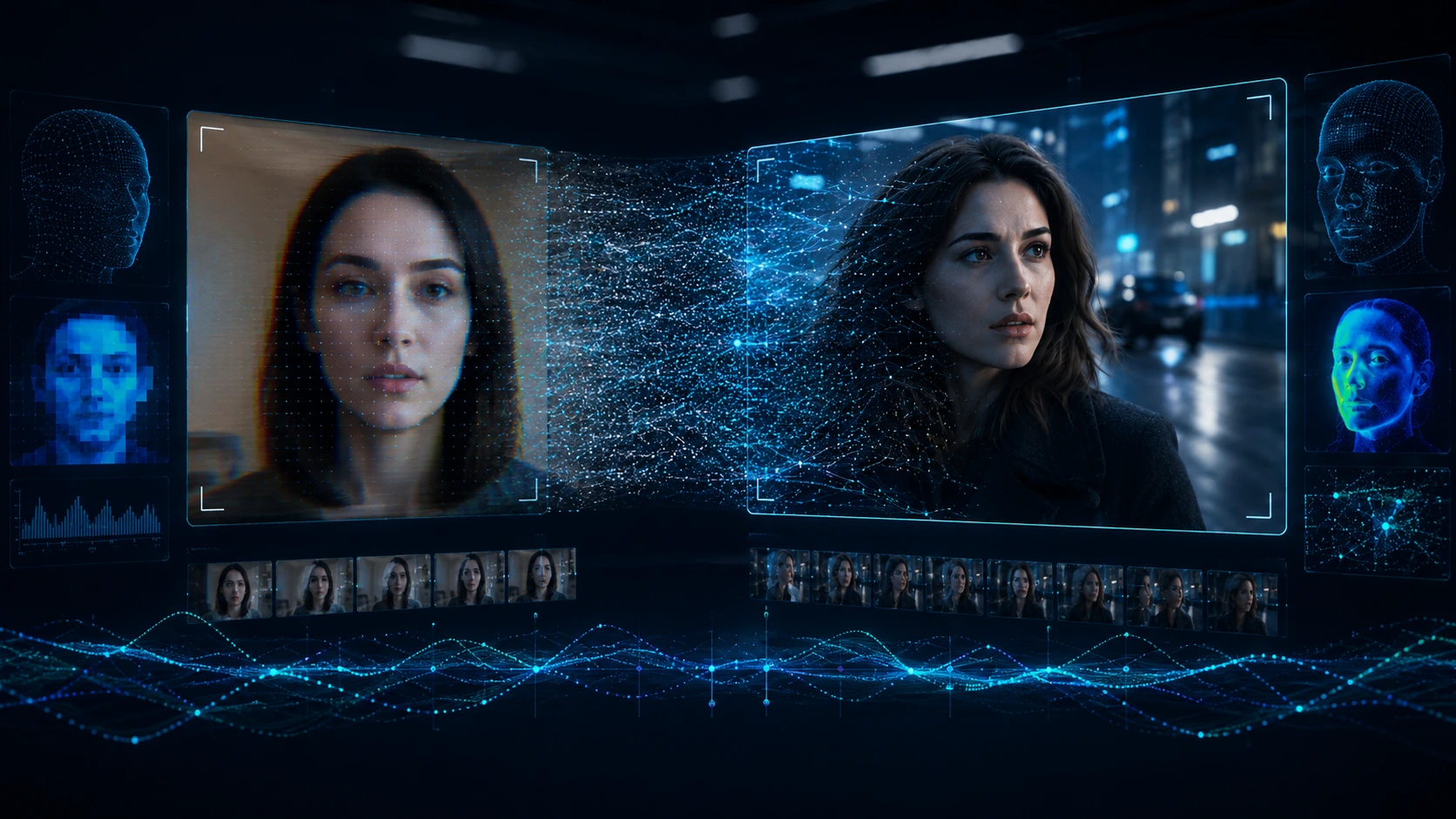
Modern generative video systems expand the problem.
AI can increasingly generate:
- synthetic people;
- artificial environments;
- objects and events;
- camera movement;
- longer visual sequences;
- scenes that may never have existed.
As a result, the detection question is becoming broader.
Instead of asking only:
“Has this face been manipulated?”
analysts may also need to ask:
“Does the video show indicators that the sequence may have been AI-generated or significantly altered using synthetic media techniques?”
This changes what modern detection systems need to evaluate.
Why Can Older Deepfake Detectors Struggle With New Generators?
Deepfake detectors learn from data.
If a system is trained primarily on particular manipulation methods, it may become effective at recognizing characteristics associated with those methods.
The problem appears when completely different generators produce content that does not contain the same characteristics.
This is known as a generalization challenge.
A detector could perform strongly against synthetic content generated using techniques represented in its training data but perform differently when confronted with an unfamiliar model.
That creates an important distinction:
High detection performance on known generators does not automatically establish the same reliability on unseen generators.
This is increasingly relevant because new video-generation models can appear faster than detection datasets and evaluation processes can be updated.
Why Does Temporal Consistency Matter in Diffusion-Generated Video?
A video is not simply a collection of unrelated images.
Each frame exists in relation to the frames before and after it.
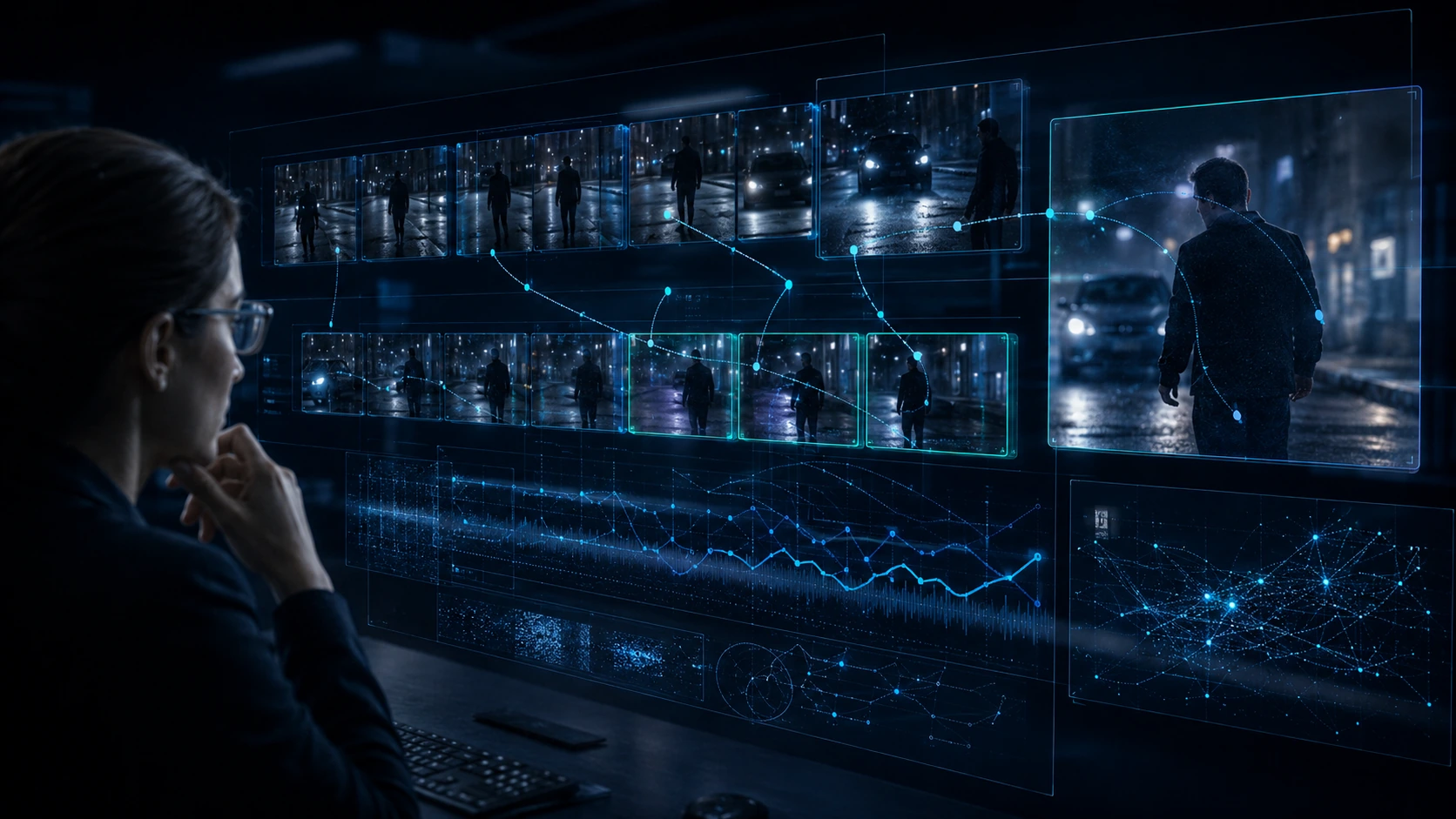
That means video analysis can consider both spatial information and temporal information.
Spatial information concerns what appears inside an individual frame.
Temporal information concerns what happens across frames.
For example, analysts may consider broader categories such as:
- object stability;
- movement across frames;
- scene consistency;
- appearance changes;
- foreground and background relationships;
- lighting continuity;
- motion behavior.
This does not mean one unusual movement or visual inconsistency proves that a video is AI-generated.
Instead, temporal information provides another category of evidence that can contribute to a wider assessment.
A broader deepfake video investigation workflow can therefore be useful when suspicious video becomes part of an investigation rather than simply requiring an automated classification.
Does Diffusion Generation Make Frame-Level Analysis Obsolete?
No.
Individual frames can still contain valuable forensic information.
The important change is that frame-level analysis alone may not provide enough information for every modern synthetic-video scenario.
A more complete assessment can consider several evidence categories:
Spatial evidence: characteristics visible within individual frames.
Temporal evidence: relationships and changes across frames.
Contextual evidence: whether the media matches its claimed event, source, location, or circumstances.
Provenance information: available information about how the media was created, edited, or distributed.
These categories provide different types of information and should not automatically be treated as interchangeable.
Can Compression and Re-Encoding Affect Diffusion-Generated Video Detection?
Yes.
Video encountered in real investigations often differs substantially from the original file.
A video may have been:
- uploaded to a social-media platform;
- downloaded and reposted;
- forwarded through a messaging application;
- resized;
- cropped;
- screen-recorded;
- converted into another format;
- compressed multiple times.
These transformations can modify information that may otherwise be useful during forensic analysis.
This is why obtaining the original or highest-quality available file is preferable when possible.
However, a compressed video should not automatically be considered unusable. Instead, analysts should account for the media's quality and processing history when interpreting detection findings.
Why Is Detection Generalization Becoming More Important?
Generation technology is evolving rapidly.
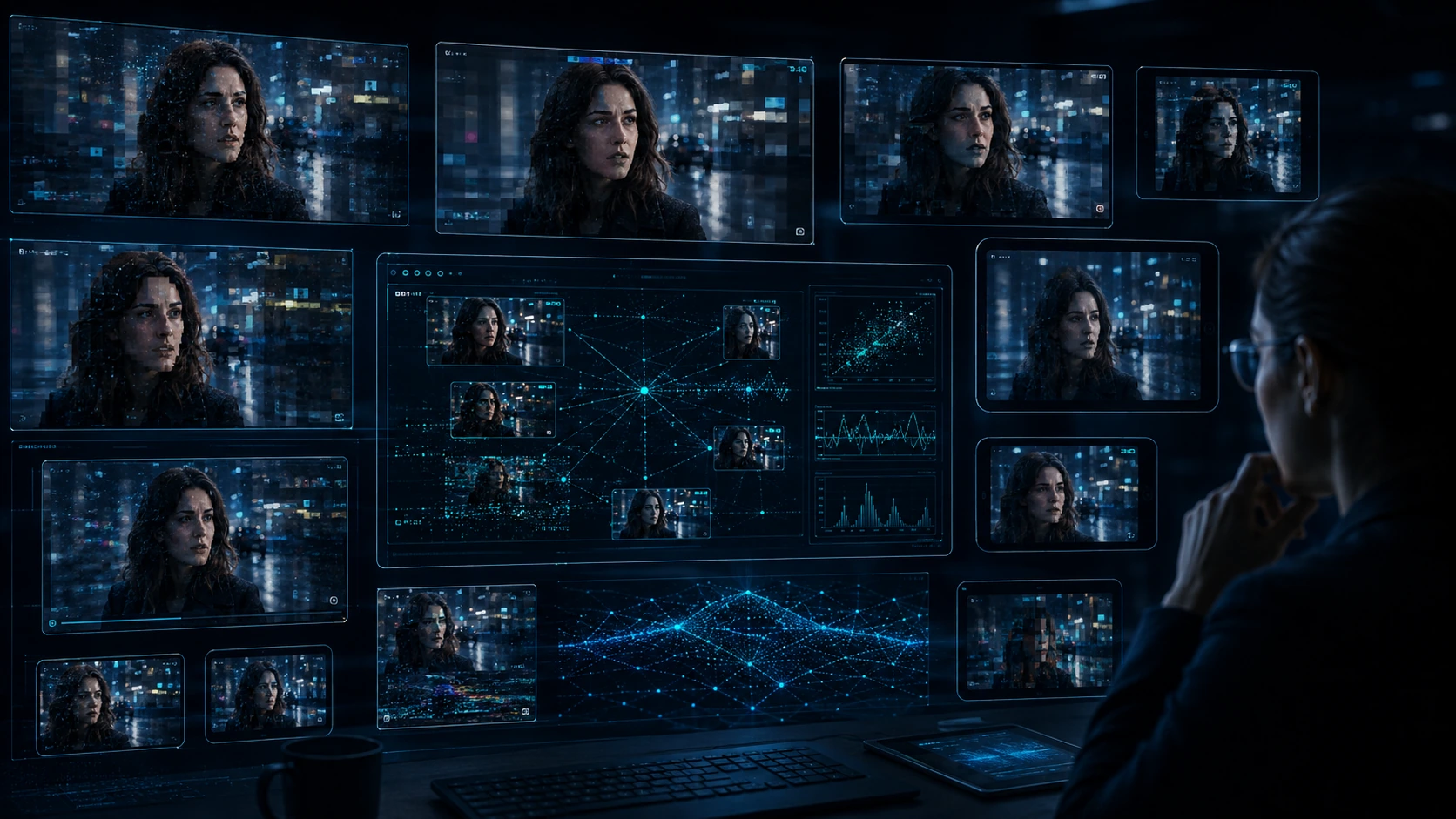
A detection system deployed today could encounter synthetic videos from generators that were not available when that system was originally trained or evaluated.
As generation methods continue to evolve, teams also need to understand the wider changes shaping the deepfake detection landscape in 2026, including emerging verification challenges, evolving synthetic-media techniques, and changing enterprise requirements.
This means practical evaluation should not focus only on:
“How effectively does the system identify deepfakes when tested against a familiar benchmark dataset?”
Organizations should also ask:
“How does it behave when the generator, compression level, video quality, or manipulation method changes?”
Detection Accuracy on Known Generators ≠ Reliability on Unseen Generators
This distinction is particularly important in real-world deployments because investigators usually do not know which generation system created a suspicious video before analyzing it.
What Should Enterprises Look for in Modern Video Deepfake Detection?
Organizations evaluating Video Deepfake Detection should look beyond a single accuracy number.
Useful evaluation questions include:
- Has the system been tested across multiple generation methods?
- Can it analyze video rather than relying only on isolated frames?
- How does it perform when encountering unfamiliar synthetic content?
- What happens after compression or re-encoding?
- Does it communicate confidence or uncertainty?
- Can analysts review supporting findings?
- Can the analysis fit into a wider verification or investigation workflow?
- Are limitations clearly communicated?
The objective should not be to find a system that claims every suspicious video can always be classified with certainty.
A more credible goal is to obtain structured findings that help analysts make an informed verification decision.
What Can Diffusion-Generated Video Detection Establish—and What Can It Not?
Detection analysis may help indicate whether a video contains characteristics consistent with synthetic generation or manipulation.
However, a detection result does not automatically establish:
- who created the video;
- which exact generation platform was used;
- why the video was created;
- who originally distributed it;
- whether every person sharing it knew it was synthetic;
- whether it belongs to a coordinated threat campaign.
Those questions require additional contextual or investigative evidence.
Likewise, a low-confidence result should not automatically be interpreted as proof that a video is authentic.
Detection findings should be considered within the quality and limitations of the available evidence.
What Are the Limitations of Detecting Diffusion-Generated Videos?
Diffusion-generated video detection remains an evolving area.
Results may be influenced by:
- the generation architecture;
- whether similar generators were represented during training;
- video resolution;
- duration;
- compression;
- cropping;
- resizing;
- frame-rate changes;
- re-encoding;
- availability of the original file;
- the type of scene being analyzed.
Detection systems can also produce incorrect classifications.
For high-consequence cases, automated results should therefore support—not replace—analyst review and contextual investigation.
Where available, content provenance and deepfake detection can provide complementary information about media history and origin, but provenance and forensic detection answer different questions.
How Will Diffusion Models Shape the Future of Video Verification?
The broader change is that deepfake detection is moving from recognizing a relatively stable set of manipulation patterns toward operating within a continuously changing generation environment.
A useful way to understand this evolution is:
Generator evolution → New synthetic characteristics → Detection testing → Cross-generator generalization → Real-world robustness → Analyst review
As generators improve, detection systems will also need continued evaluation against new content-generation methods and realistic media conditions.
The objective is unlikely to be finding one permanent artifact that identifies every future synthetic video.
Instead, modern detection needs to remain adaptable as generators, formats, quality levels, and manipulation techniques evolve.
Conclusion
Diffusion models are changing video deepfake detection because synthetic video is expanding beyond traditional face manipulation and earlier GAN-era generation patterns.
Modern AI-generated videos can contain increasingly coherent people, objects, scenes, movement, and environments. Detection systems therefore need to consider more than familiar visual artifacts.
Spatial evidence, temporal relationships, cross-generator generalization, compression robustness, contextual information, provenance, and uncertainty all become increasingly important.
The central takeaway is simple:
Diffusion models do not make video deepfake detection obsolete. They make generalization, robustness, and evidence-based interpretation more important.
A DeepGaze media-verification workflow can support the examination of suspicious video while keeping automated findings within a broader process of analyst review, contextual assessment, and investigative decision-making.
Frequently Asked Questions
Ready to experience & accerlate your Investigations?
Experience the speed, simplicity, and power of our AI-powered Investiagtion platform.
Tell us a bit about your environment & requirements, and we’ll set up a demo to showcase our technology.