
Media Verification vs Threat Attribution: Why Does the Difference Matter?
Digital media now plays an important role in threat intelligence, cyber investigations, executive communications, fraud analysis, and incident response. Videos, images, and audio recordings can help analysts understand what happened during an incident, but they can also introduce uncertainty when their authenticity or origin is unclear.
This creates an important distinction for investigators: media verification and threat attribution are not the same process.
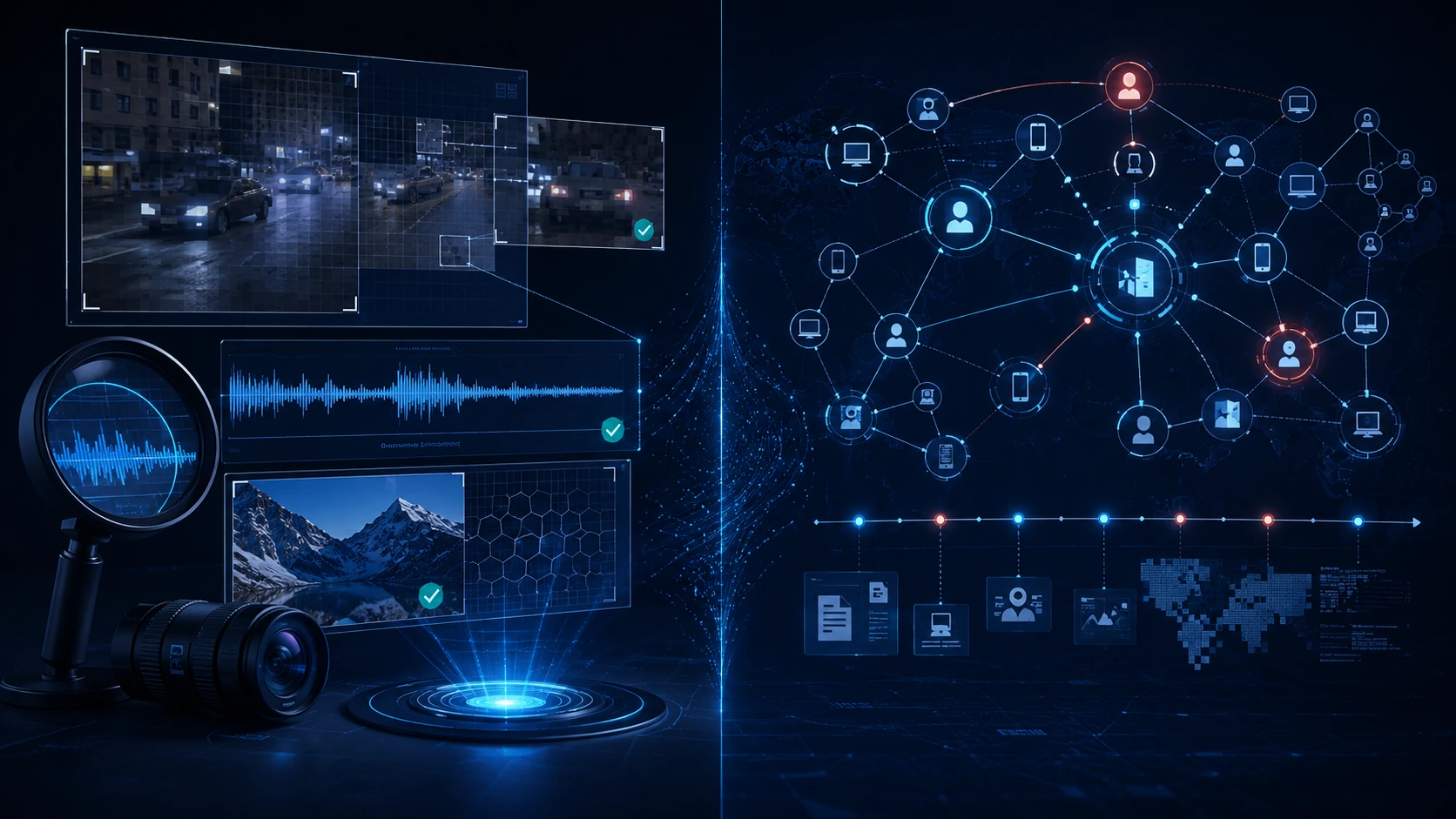
Media verification asks whether digital content is authentic, manipulated, synthetic, or uncertain. Threat attribution asks who may be responsible for creating, distributing, coordinating, or benefiting from the activity.
For teams using Deepfake Detection for Threat Intelligence, understanding this difference helps prevent a technical media finding from being interpreted as proof of responsibility.
A deepfake may be identified as suspicious, but that does not automatically reveal who created it, why it was created, or whether the account distributing it belongs to the original actor.
What Is Media Verification in Threat Intelligence?
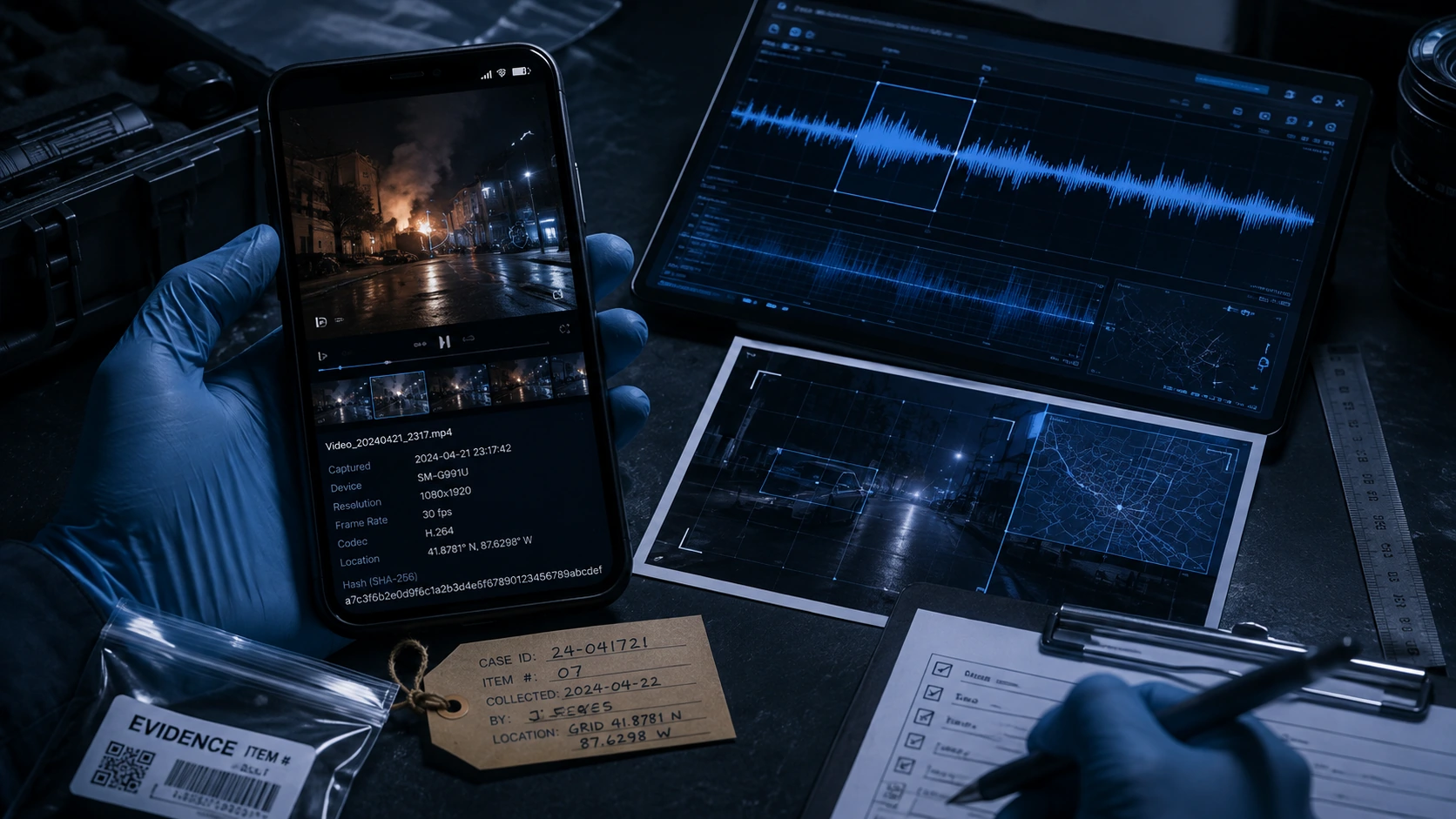
Media verification focuses on the digital content itself.
When analysts receive suspicious audio, video, or images, they need to determine how much confidence they can place in that material before using it in an intelligence assessment or operational decision.
A verification process may seek to answer questions such as:
- Is the media authentic or manipulated?
- Does the available file appear suspicious?
- Has the content been altered or generated?
- Is the source file available?
- Has the media been repeatedly compressed, forwarded, or reposted?
- Is there enough information to reach a conclusion?
- Should the media receive additional forensic review?
A structured forensic media verification workflow can help teams organize this assessment before suspicious content influences a wider investigation.
The outcome does not always need to be simply "real" or "fake." In some cases, the appropriate conclusion may be that authenticity remains uncertain and additional evidence is required.
What Is Threat Attribution?
Threat attribution focuses on responsibility.
Instead of asking whether a media file is manipulated, analysts ask who may be connected to the activity and what evidence supports that connection.
Threat attribution may involve examining:
- accounts involved in distribution;
- communication patterns;
- infrastructure;
- timestamps;
- known threat actors;
- previous incidents;
- campaign behavior;
- associated domains or platforms;
- relationships between accounts;
- motive and potential beneficiaries;
- corroborating intelligence.
This distinction is important because the person who creates manipulated media may not be the same person who publishes it.
Likewise, the person who shares the content may have no knowledge that it has been manipulated.
Media Verification vs Threat Attribution: Key Differences
| Factor | Media Verification | Threat Attribution |
|---|---|---|
| Primary question | Is the media authentic? | Who may be responsible? |
| Main focus | Audio, video or image | Actor, account, group or campaign |
| Typical evidence | Media files and available context | Multiple intelligence sources |
| Possible result | Authentic, suspicious, manipulated or inconclusive | Possible association or attribution assessment |
| Main risk | Trusting manipulated content | Incorrectly assigning responsibility |
| Analyst objective | Establish confidence in media | Establish confidence in actor or campaign association |
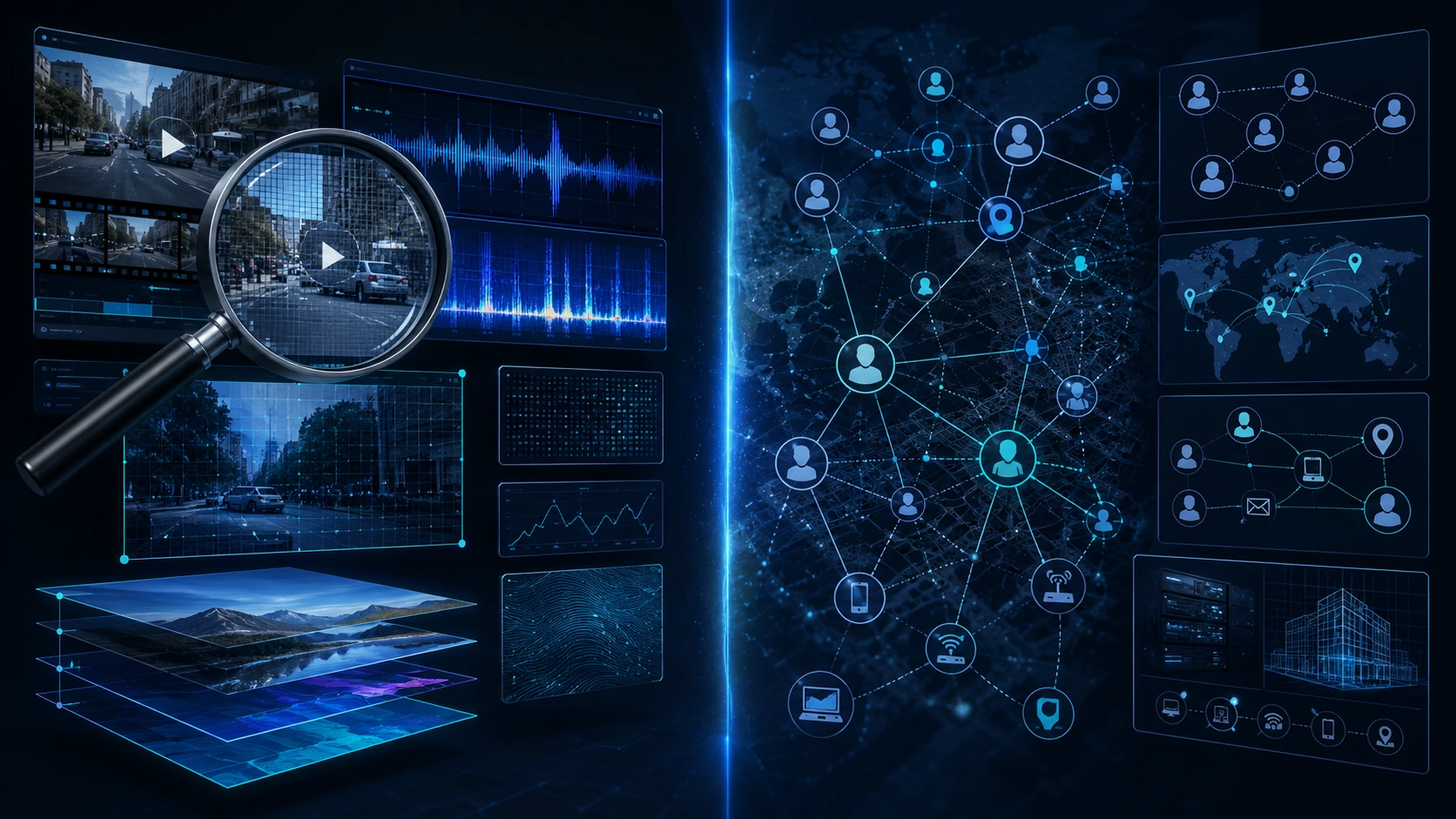
The two processes can support each other, but one should not replace the other.
Why Does Detecting a Deepfake Not Automatically Identify the Threat Actor?
Suppose investigators confirm that a video has been manipulated.
That finding answers an important question about the media, but several attribution questions remain unanswered.
Who created the video?
Who first uploaded it?
Was the uploader working with the creator?
Was the content copied from another channel?
Did legitimate users unknowingly amplify it?
Was the media produced as part of a coordinated campaign, or was it an isolated incident?
These questions require additional investigation.
This is why deepfake analysis in digital forensics should be treated as one source of investigative information rather than automatic proof of attribution.
Detection can establish suspicion around the media. Attribution requires evidence connecting activity to an actor.
Can Authentic Media Still Be Part of a Threat Campaign?
Yes.
Threat intelligence teams should also avoid assuming that authentic media is automatically trustworthy in context.
A genuine video may be:
- presented with a false description;
- edited to remove important context;
- published with a misleading date;
- falsely associated with another location;
- selectively clipped;
- amplified by coordinated accounts;
- combined with fabricated claims.
This means media authenticity and narrative accuracy are different questions.
A video can be technically authentic while still being used as part of misinformation, fraud, impersonation, or influence activity.
Threat intelligence therefore needs to consider both what the media is and how the media is being used.
Where Does Forensic Grade AI Verification Fit?
Forensic grade AI verification becomes particularly relevant when the authenticity of digital media could affect a high-consequence investigation or intelligence decision.
Examples may include:
- suspected executive impersonation;
- national security incidents;
- fraud investigations;
- disputed digital evidence;
- viral misinformation involving an organization;
- suspicious communications attributed to public figures;
- cybercrime investigations.
The purpose of deeper verification is to provide analysts with structured findings that can be evaluated alongside other evidence.
It should not be treated as a substitute for source analysis, attribution work, human review, or investigative judgment.
A forensic finding may indicate that content deserves further scrutiny. The broader intelligence process still needs to determine what that finding means in context.
How Does AI Deepfake Forensics Support an Investigation?
AI Deepfake Forensics can help investigators examine suspicious media as part of a larger digital investigation.
Its role is primarily connected to questions about the media rather than automatically determining the identity of the responsible actor.
For example, deepfake forensics for cybercrime investigations may support cases involving impersonation, fraudulent communications, manipulated evidence, or coordinated online activity.
The resulting media findings can then be combined with other investigative information.
This distinction is especially important when analysts communicate conclusions to decision-makers.
A report should clearly separate:
What has been established about the media
from
What has been established about the suspected actor.
What Additional Evidence Is Needed for Threat Attribution?
Attribution normally becomes stronger when multiple independent signals support the same assessment.
Depending on the investigation, analysts may examine:
- where the media first appeared;
- account creation and activity patterns;
- relationships between distributing accounts;
- known infrastructure;
- timing across platforms;
- previous campaigns;
- communication records;
- behavioral similarities;
- intelligence from other investigations;
- supporting technical evidence.
Analysts should also distinguish between creation, publication, distribution, and amplification.
These activities may involve completely different actors.
Similarly, content provenance and deepfake detection can provide useful information about digital media history and authenticity, but provenance information alone does not necessarily identify the person responsible for a threat campaign.
Example: A Suspicious Executive Video Appears Online
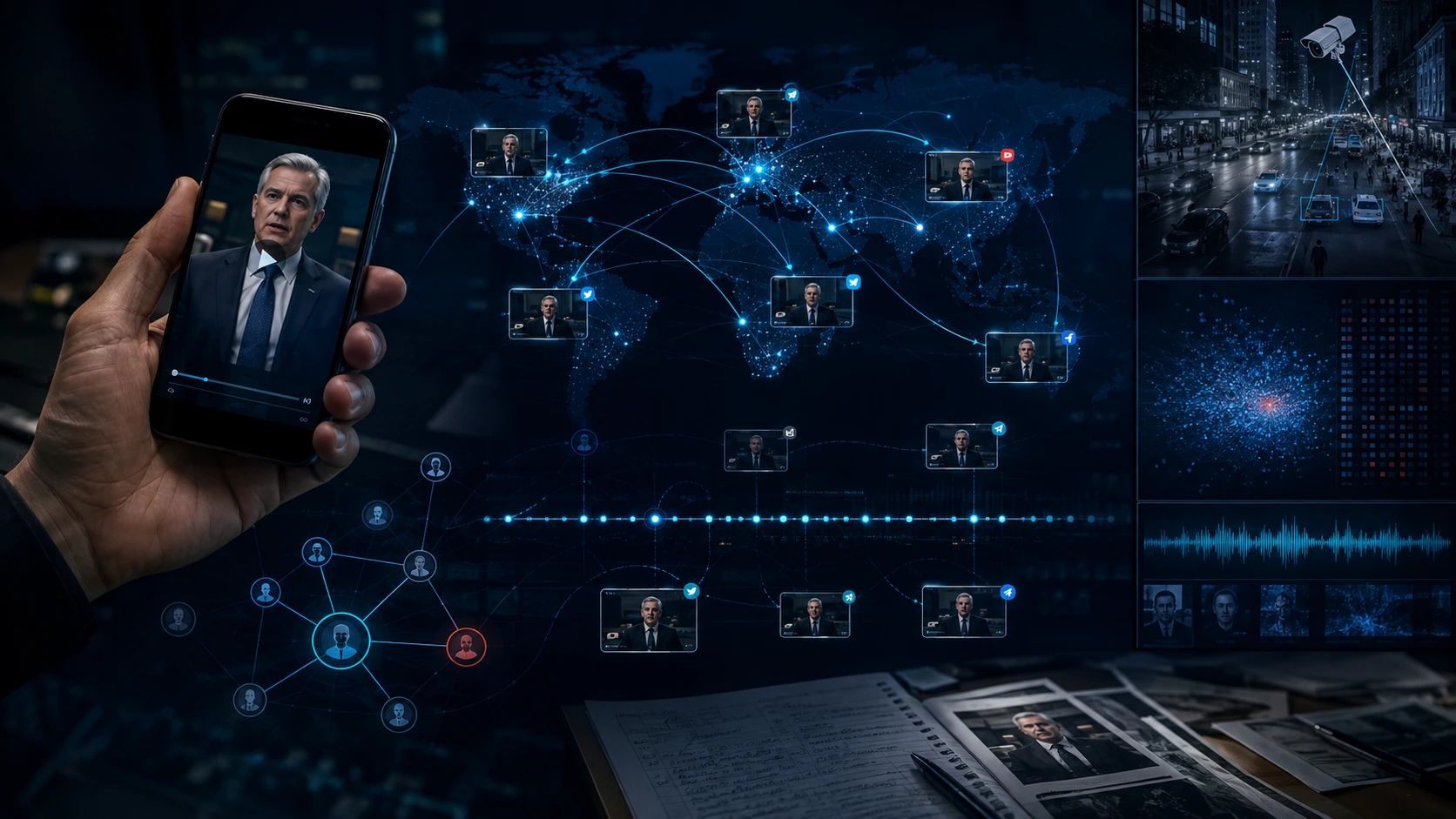
Consider a video that appears to show a company CEO announcing an unexpected financial decision.
The video spreads rapidly across social platforms.
The investigation could proceed through several distinct questions.
Step 1: Verify the media
Analysts assess whether the video itself appears authentic, manipulated, or uncertain.
Step 2: Examine the source
Where was the earliest known version published?
Step 3: Review distribution
Which accounts amplified the content, and how quickly?
Step 4: Corroborate the claim
Do official communications or other reliable sources support the statement?
Step 5: Investigate possible coordination
Are multiple accounts behaving in a way that suggests organized distribution?
Step 6: Assess attribution
Is there sufficient evidence to associate the activity with a known actor or campaign?
During executive impersonation investigations, identifying manipulated media can therefore be an important investigative step without being the final attribution conclusion.
What Mistakes Should Threat Intelligence Teams Avoid?
Several reasoning errors can weaken an investigation:
- Assuming that the first account discovered created the media.
- Treating distribution as proof of authorship.
- Assuming authentic media cannot be used deceptively.
- Treating a deepfake finding as evidence of motive.
- Attributing activity based on one technical indicator.
- Failing to document uncertainty.
- Mixing forensic findings with intelligence judgments.
- Ignoring alternative explanations.
A strong threat-intelligence assessment should make clear which conclusions are supported by evidence and which remain hypotheses.
How Should Media Verification and Threat Attribution Work Together?
The most useful approach is to treat verification and attribution as connected but separate stages:
Suspicious media → Media verification → Context assessment → Corroboration → Attribution assessment → Operational decision
Media verification helps determine whether the content itself can be trusted.
Threat attribution examines the wider activity surrounding that content.
Keeping those stages separate reduces the risk that one technical finding becomes an unsupported intelligence conclusion.
Conclusion
Media verification and threat attribution solve different investigative problems.
Verification asks whether digital media is authentic, manipulated, synthetic, or uncertain. Attribution asks who may be responsible for the activity and how strongly the available evidence supports that conclusion.
A confirmed or suspected deepfake can become an important intelligence signal, but it should not automatically establish authorship, intent, distribution responsibility, or campaign attribution.
Organizations therefore need to combine media analysis with source evaluation, corroborating intelligence, contextual investigation, and human judgment.
A DeepGaze deepfake detection platform workflow can support the examination of suspicious audio, video, and images while threat-intelligence teams use wider investigative evidence to assess attribution, intent, and potential impact.
Frequently Asked Questions
Ready to experience & accerlate your Investigations?
Experience the speed, simplicity, and power of our AI-powered Investiagtion platform.
Tell us a bit about your environment & requirements, and we’ll set up a demo to showcase our technology.