

Deepfake Detection in Identity Verification: How Can Teams Balance Fraud Detection, User Friction, and Operational Risk?
Identity verification teams are facing a difficult operational problem. As AI-generated images, manipulated videos, synthetic faces, and other forms of deceptive media become more convincing, detecting suspicious content is only one part of the challenge.
The harder question is what happens when organizations make deepfake controls more sensitive.
Tighter controls may identify more suspicious attempts, but they can also increase additional checks, manual reviews, and friction for legitimate users. More permissive controls may make verification smoother, but sophisticated manipulated media may have a greater opportunity to progress through the process.
A recent discussion among fraud-prevention practitioners highlighted exactly this tension. Participants described AI-generated identity media passing initial checks, legitimate users being affected by stricter controls, fraud being detected later through behavioral analysis, and the need to combine multiple verification signals rather than depending on a single deepfake check.
The operational challenge is therefore not simply how to detect more deepfakes.
It is how to balance fraud detection, legitimate-user experience, verification conversion, and operational risk when the available evidence is not always perfectly clear.
Why Is Deepfake Detection Becoming an Operational Identity Verification Problem?
Deepfake detection becomes an operational issue when the result influences a real identity decision.
A suspicious image used in an online discussion has a different consequence from a suspicious selfie being used to open a financial account, recover access to a sensitive system, or approve a high-risk action.
Identity verification teams must make decisions quickly while also avoiding two different mistakes:
- allowing manipulated media to progress because it appears genuine;
- challenging legitimate users because genuine media appears suspicious.
The challenge increases because identity verification often happens under imperfect conditions. Users may have older devices, inconsistent lighting, compressed video, low-quality cameras, unstable connections, or identity documents that are difficult to capture clearly.
At the same time, attackers can increasingly use synthetic or manipulated content that appears convincing during normal visual review.
Organizations therefore have to think beyond whether a detection tool produces a simple suspicious or non-suspicious result. The real operational question is how much trust should be placed in that result and what action should follow.
Organizations examining the wider problem can also consider the deepfake risks in modern identity-verification workflows.
How Can Deepfakes Pass Initial Identity Verification Checks?
Identity verification can involve several different checks, including identity documents, facial comparison, selfies, video capture, liveness, account information, and other risk signals.
A sophisticated attack does not necessarily need to defeat every control individually. It may only need to create enough apparently consistent evidence to progress through the workflow.
Manipulated identity media can potentially include:
- AI-generated or altered facial images;
- face-swapped selfies;
- manipulated verification videos;
- synthetic identity imagery;
- altered identity documents;
- cloned or manipulated audio;
- presented or digitally introduced deceptive media.
A fraudulent attempt may appear convincing during an early stage even if inconsistencies become visible when additional information is considered.
This is one reason a successful result from one verification control should not automatically establish that the entire identity attempt is trustworthy.
The broader technical concepts behind identifying manipulated audio, video, and images are covered in the deepfake detection guide for digital media.

Why Do False Positives and False Negatives Create Different Operational Risks?
No fraud-control strategy can be evaluated only by asking how many suspicious attempts it identifies.
Teams also need to understand what happens when the system is wrong.
What Is a False Positive in Deepfake Detection?
A false positive occurs when authentic media is incorrectly classified or escalated as suspicious.
Inside an identity-verification workflow, the security consequence may be limited, but the operational consequence can still be significant.
A genuine user may need to:
- repeat a selfie or video capture;
- provide another identity document;
- complete another verification step;
- wait for a manual review;
- contact customer support;
- abandon the verification process entirely.
If unnecessary escalations occur frequently, manual-review queues can grow and verification completion can fall.
This means false positives are not only a model-performance issue. They can become a customer-experience and operational-capacity issue.
What Is a False Negative in Deepfake Detection?
A false negative creates the opposite risk.
Manipulated media is treated as genuine and allowed to progress.
The initial verification may appear successful, but the fraud risk moves downstream.
A simplified path can look like this:
Manipulated identity media
↓
Initial verification progresses
↓
Account or access is approved
↓
Activity begins
↓
Suspicious behavior is detected later
↓
Investigation and remediation follow
The two errors therefore produce very different consequences.
| Verification Outcome | Potential Operational Consequence |
|---|---|
| Genuine media accepted | Verification proceeds normally |
| Genuine media flagged | Additional checks, user friction, or manual review |
| Manipulated media flagged | Suspicious attempt can be examined earlier |
| Manipulated media accepted | Fraud risk moves further downstream |
An effective verification strategy must account for both sides of this decision.

How Do Deepfake Detection Thresholds Affect Fraud Detection and Verification Conversion?
Identity teams may be tempted to respond to rising synthetic-media risk by making detection controls increasingly strict.
That can improve scrutiny, but stronger sensitivity does not come without operational consequences.
More sensitive controls may result in:
- additional suspicious cases being escalated;
- more legitimate users requiring secondary verification;
- larger manual-review queues;
- longer verification times;
- greater customer-support demand;
- lower verification completion.
More permissive controls may produce the opposite effect:
- fewer interruptions;
- fewer cases requiring review;
- smoother onboarding;
- higher immediate completion;
- greater possibility that sophisticated manipulated media progresses.
The goal should therefore not be to make controls as strict as technically possible.
Detection sensitivity is an operational risk decision involving fraud exposure, false rejections, verification conversion, and review capacity.
Different workflows can justify different levels of scrutiny.
A low-risk action may not require the same escalation policy as opening a high-value financial account, recovering privileged access, or authorizing a sensitive transaction.
Why Isn't Basic Liveness Always Enough for Deepfake Risk?
Liveness can be an important identity-verification control, but it addresses a specific part of the verification problem.
It should not automatically be interpreted as proof that every piece of media in the session is authentic.
Different attack scenarios can target different parts of the process.
Some attacks may involve presenting deceptive content to a capture device. Others may attempt to introduce manipulated content into a digital workflow. A facial image may also appear live while questions remain about whether the underlying media has been synthetically generated or altered.
For this reason, organizations should understand what each security control actually establishes.
Deepfake detection and identity verification, for example, answer different trust questions within a verification process.
Identity verification asks whether the available evidence supports the claimed identity.
Deepfake detection asks whether the media itself shows indications of synthetic generation or manipulation.
Those questions can overlap, but they are not interchangeable.
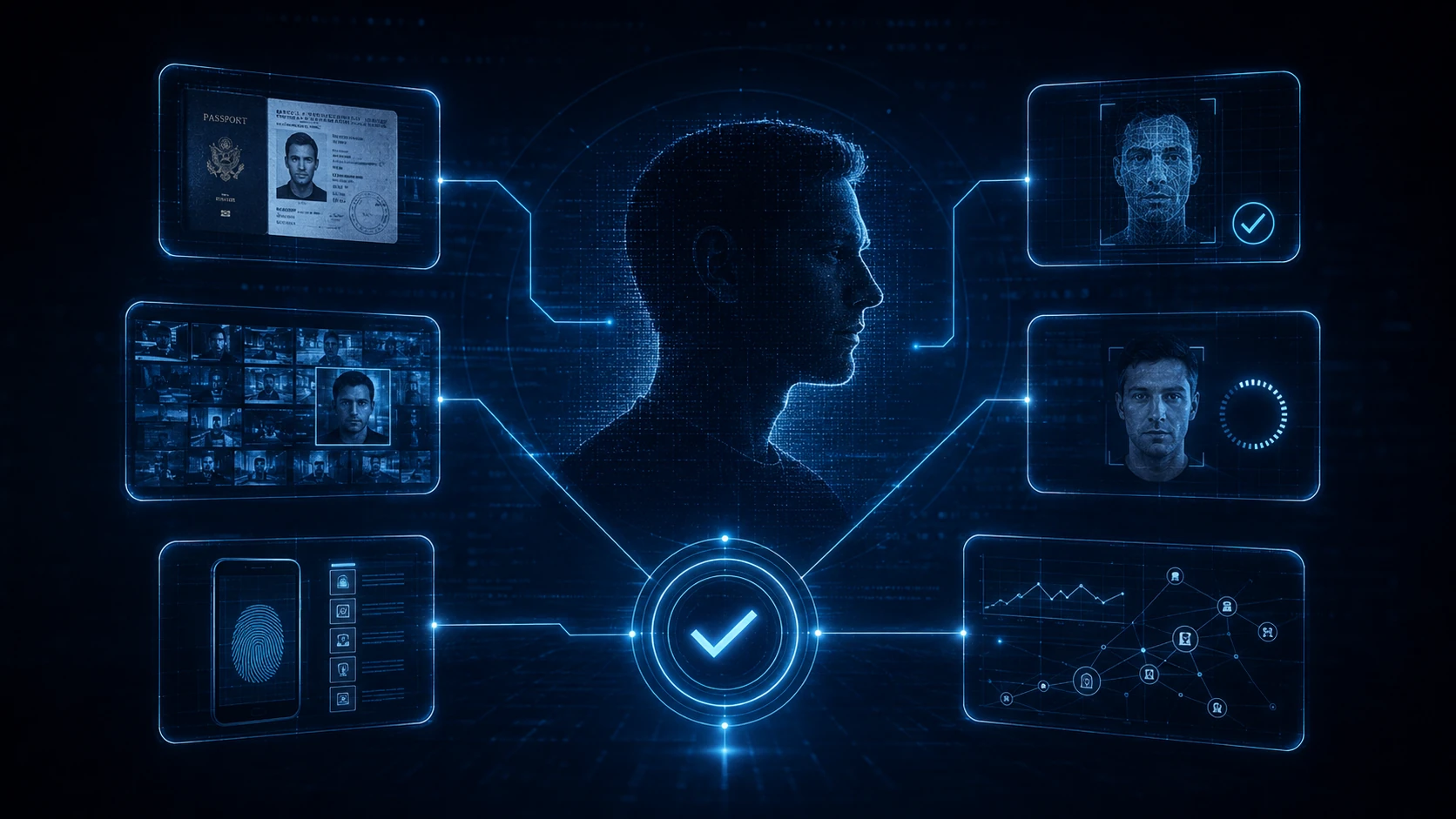
Why Can Single-Signal Verification Create Gaps?
A central point raised in the fraud-prevention discussion was the danger of depending on one deepfake-detection result as the primary answer.
Identity risk is rarely represented by only one signal.
Depending on the workflow, organizations may consider information relating to:
- media authenticity;
- identity matching;
- document authenticity;
- facial or biometric checks;
- liveness results;
- device information;
- session characteristics;
- previous verification attempts;
- account history;
- behavioral risk.
These signals do not need to perform the same function.
Their value comes from providing different pieces of evidence about the verification attempt.
For example, media-authenticity analysis may indicate whether submitted video appears manipulated, while document verification evaluates the identity document and device intelligence provides information about the environment from which the verification is occurring.
Deepfake detection should therefore be considered one component of a wider decision environment rather than a replacement for the other controls.
This distinction is especially relevant when evaluating synthetic-media risks within KYC onboarding.
Should Identity Verification Signals Be Evaluated in Parallel or Sequentially?
The order in which verification signals are considered can also affect how risk is interpreted.
A purely sequential workflow might evaluate one check, mark it as passed, and then move to the next.
For example:
Document verification
↓
Facial verification
↓
Liveness
↓
Media-authenticity assessment
↓
Final decision
This approach can work, but teams should avoid treating each earlier pass as independent proof that the entire verification attempt is trustworthy.
Where workflow architecture permits, independent signals can instead contribute to the same verification decision.
Conceptually:
Document signals
Media-authenticity signals
Biometric signals
Liveness signals
Device/session signals
↓
Correlation
↓
Risk assessment
↓
Proceed, verify further, or escalate
This does not mean every technical process must literally execute at exactly the same time.
The important principle is that relevant independent signals should be considered together before a consequential identity decision is made.
Why Do Conflicting Verification Signals Matter?
Multiple verification signals become particularly useful when they disagree.
A suspicious identity attempt does not always involve one control producing an obvious failure.
Instead, several individually plausible signals may create an unusual pattern when examined together.
For example:
- an identity document may appear valid while media-authenticity analysis raises concerns;
- facial information may be consistent while device or session behavior appears unusual;
- a liveness result may appear normal while submitted media contains suspicious characteristics;
- one verification session may differ significantly from previous attempts associated with the account.
These inconsistencies can provide important context.
The disagreement between verification signals can itself become useful risk information.
This is why correlation matters.
A single signal may not be strong enough to justify rejecting a user. Several inconsistent signals, however, may justify additional verification or human review.
When Should a Suspicious Identity Verification Attempt Move to Manual Review?
Manual review can provide an important safeguard when automated results do not produce a sufficiently clear decision.
However, sending every suspicious signal to an analyst would create exactly the operational problem organizations are trying to avoid.
Escalation should therefore be risk-based.
Manual review may become more appropriate when:
- a detection result is ambiguous;
- multiple verification signals conflict;
- repeated attempts produce inconsistent evidence;
- submitted media is unusually poor in quality;
- the account or transaction carries high potential impact;
- accepting the identity incorrectly could create significant financial or security consequences.
Reviewers should also receive enough information to understand why the case was escalated.
A binary warning without context is less useful than evidence showing which elements of the verification attempt require closer examination.
A practical operational model is:
Detect → Assess → Correlate → Escalate → Review → Decide
Detect: Identify potential manipulation or suspicious media.
Assess: Understand what the result means and the limitations of the available evidence.
Correlate: Compare the result with independent identity, document, session, or risk signals.
Escalate: Route sufficiently suspicious or ambiguous attempts to an appropriate secondary process.
Review: Conduct additional verification or analyst assessment where justified.
Decide: Make the final identity or risk decision using the combined evidence.
The model is deliberately different from:
Detect → Reject.
A detection result should inform the decision rather than automatically become the decision.

What Role Does Behavioral Monitoring Play After Identity Verification?
One particularly important point in the fraud-prevention discussion involved an AI-generated identity attempt that was reportedly not identified during initial verification and was discovered later through behavioral analysis.
This highlights the difference between preventive verification and downstream monitoring.
Preventive verification attempts to establish sufficient trust before access is granted.
Behavioral monitoring looks for suspicious activity after an account or identity begins operating.
Examples of downstream abnormalities could include unusual account activity, unexpected transaction patterns, abnormal access behavior, or activity inconsistent with previously established patterns.
Behavioral monitoring can therefore act as an additional safety layer when an earlier verification process misses risk.
But it should not be treated as a replacement for detecting suspicious identity media earlier.
Behavioral monitoring can provide a downstream safety net, but identifying manipulated media during initial verification may prevent risk from progressing further into the organization.
Why Is Fraud Detected After Verification Harder to Resolve?
When fraud is identified before approval, the organization primarily needs to investigate the attempted verification.
When the same fraud is identified after onboarding, the scope can become wider.
Investigators may need to determine:
- when the identity was first created;
- which media was submitted;
- what verification results were recorded;
- what accounts or systems were accessed;
- what transactions or actions occurred;
- whether additional identities are connected;
- whether other accounts used similar methods;
- what remediation is necessary.
This can transform what began as an identity-verification problem into a broader fraud investigation.
The longer manipulated identity media remains trusted, the more decisions may be made based on that trust.
Earlier identification therefore has operational value beyond simply increasing detection accuracy.

How Can Teams Reduce Deepfake Fraud Without Creating Unnecessary User Friction?
The objective should not be to maximize the number of users challenged.
Nor should it be to maximize conversion regardless of fraud risk.
The objective is to apply appropriate friction according to risk.
Organizations can consider a combination of:
- risk-based escalation;
- additional verification for ambiguous cases;
- independent verification signals;
- selective manual review;
- repeated capture when media quality is insufficient;
- downstream behavioral monitoring;
- review of previous verification activity;
- clear escalation rules for high-impact accounts or actions.
Teams should also measure both security and operational outcomes.
| Objective | Useful Operational Indicator |
|---|---|
| Identify synthetic-media fraud | Confirmed suspicious or fraudulent attempts |
| Protect legitimate users | False-positive or false-rejection outcomes |
| Maintain onboarding performance | Verification completion or conversion |
| Control operational workload | Manual-review and escalation volume |
| Detect missed fraud | Post-verification fraud incidents |
Looking only at detection rates can hide problems elsewhere in the workflow.
A system may detect more suspicious attempts while simultaneously causing excessive legitimate-user abandonment.
Another system may create excellent conversion while allowing too many high-risk cases to progress.
The operational goal is to find a defensible balance.
How Should Identity Verification Controls Adapt as Deepfake Attacks Evolve?
Verification policies should not remain static while attack patterns change.
Organizations can periodically review:
- confirmed deepfake or synthetic-media incidents;
- false-positive cases;
- known false negatives;
- analyst decisions;
- manual-review outcomes;
- verification abandonment;
- repeated attack patterns;
- downstream fraud cases;
- new presentation or injection scenarios;
- changes in the quality of submitted media.
These reviews can help teams understand whether existing escalation rules still reflect the organization's actual risk.
The lesson is not that controls need to become continuously stricter.
It is that verification processes should evolve based on what organizations learn from real operational outcomes.
Media Authenticity Confidence and Identity Confidence Are Different
One useful way to understand the problem is to separate two forms of trust.
Media Authenticity Confidence
Can the image, video, or audio being submitted be trusted as authentic media?
Identity Confidence
Does the overall evidence support that this is the person they claim to be?
These questions can influence one another, but they should not be collapsed into a single decision.
A verification system may have several reasons to believe that an identity claim is consistent while still encountering suspicious media.
Likewise, detecting potentially manipulated media does not automatically prove that every identity credential connected to the person is fraudulent.
This distinction helps teams avoid interpreting a media-authenticity signal beyond what the evidence actually supports.
A Risk-Based Operational Model for Deepfake Detection in Identity Verification
Deepfake detection becomes most useful operationally when it contributes to a wider decision process.
A risk-based model can combine independent signals before determining what action should follow.
Media authenticity
+
Document information
+
Identity and biometric signals
+
Liveness
+
Device and session context
+
Behavioral risk
↓
Assess and correlate
↓
Evaluate inconsistencies
↓
Escalate when justified
↓
Review
↓
Make the final decision
This approach recognizes that not every suspicious signal deserves rejection and not every successful verification signal deserves unconditional trust.
Organizations can balance fraud detection, user friction, and operational risk by treating deepfake detection as a media-authenticity signal inside a broader identity decision process.
When the authenticity of consequential digital media remains uncertain, organizations can also consider when suspicious audio, video, or images should receive deeper verification.
Frequently Asked Questions
Conclusion
Deepfake detection in identity verification is becoming an operational balancing problem.
Stricter controls may catch more suspicious media but can also increase false positives, verification friction, and manual-review workload. More permissive controls may protect conversion while allowing sophisticated manipulation to progress further into the organization.
Neither extreme solves the problem.
Identity teams need to understand how different signals relate, where they conflict, when additional verification is justified, and when risk should be escalated for human review.
The most important distinction is between two questions:
Can we trust the identity?
and
Can we trust the media being used to support that identity?
As synthetic media evolves, the organizations best prepared to answer both questions will not necessarily be those that reject the most verification attempts. They will be the ones that make the most informed decisions when fraud detection, user experience, and operational risk pull in different directions.
Ready to experience & accerlate your Investigations?
Experience the speed, simplicity, and power of our AI-powered Investiagtion platform.
Tell us a bit about your environment & requirements, and we’ll set up a demo to showcase our technology.